Mycosense
It all started when Juan Cruz Tubio, founder and CEO of Mycofarming, arriving in DLAB, saw me in Olivabot’s office and asked if I wanted to make water sensors. Of course I said yes enthusiastically. I always like to use tech skills for good in the world. So we started collaborating.
How it started
This was September 2024, shortly after we incorporated Olivabot BV in July 2024. We were working from DLAB — the Demonstrator Lab at VU Amsterdam, the early-stage incubator where Olivabot began.
An opportunity for funding arose when KC Group, financial advisors in Amsterdam, told us we had an opportunity for funding from the Province of Noord-Holland, via the MIT collaborative hardware subsidy. So we applied.
Before hearing the answer for funding, we started building water sensors, soil sensors, testing hardware and software infrastructure with microcontrollers, battery-powered waterproof sensor systems, research, development, telecommunication infrastructure — Bluetooth, Wi-Fi, LoRaWAN — and secure cloud databases and web applications with dashboards for monitoring.

This project is made possible with the support of the Province of Noord-Holland.
Sensors and infrastructure
Time passes by and we test many, many sensors, systems. The project evolves. While Mycofarming was building MycoLab blocks — isolated blocks to grow mycelium and test water filtration from pollutants, for applications in Netherlands canals, for agriculture and industry, to absorb pollutants before they get in the water streams — Olivabot was building the sensor systems.
We ended up using Raspberry Pi microcontrollers, connected via secure Wi-Fi and communicating with BLE for swarm intelligence, and streamlining to two sensors for the microcontroller: one for water — total dissolved solids, directly related to electric conductivity of the water — and an atmospheric sensor for CO2, temperature, and humidity.
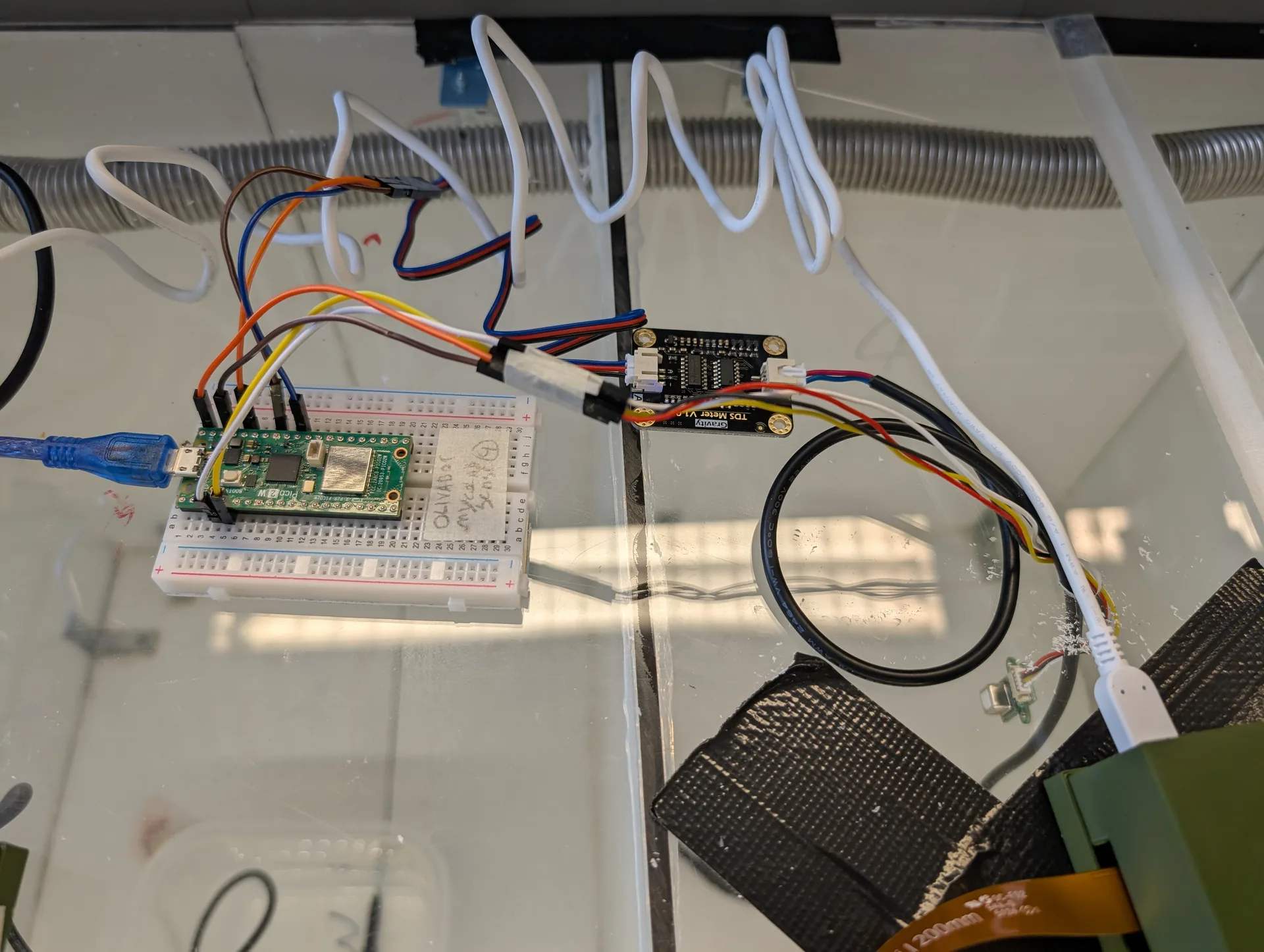
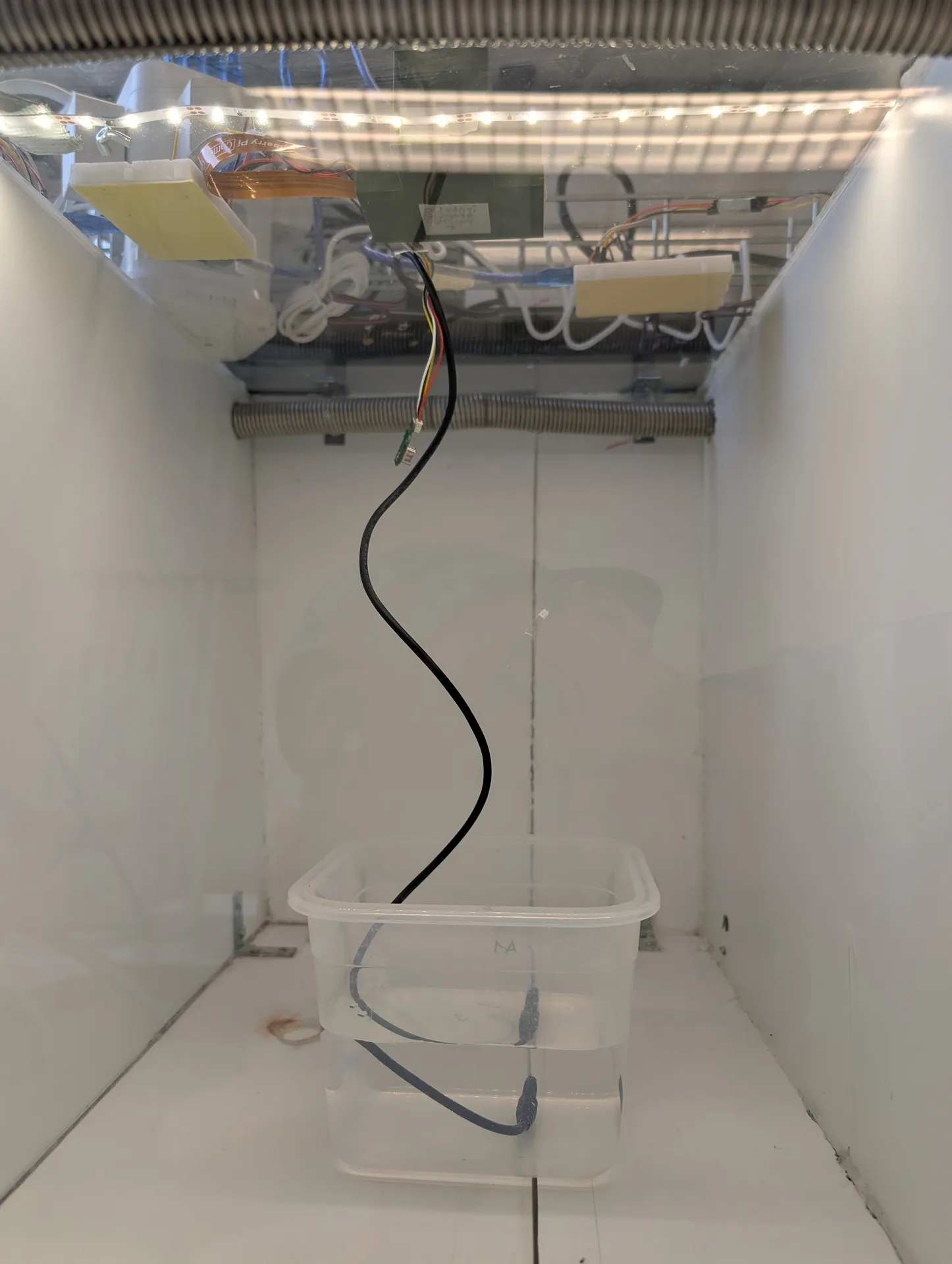
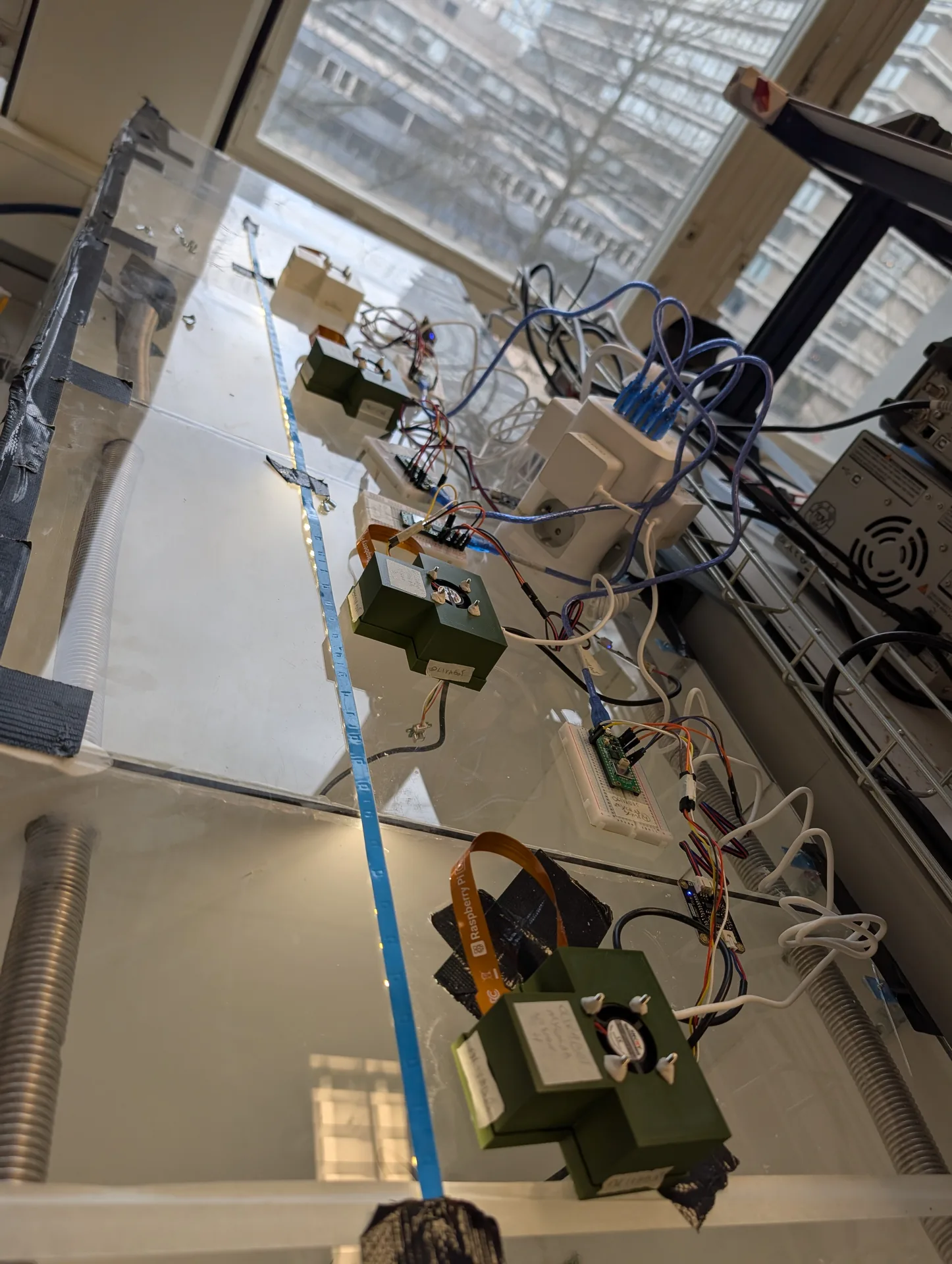
Cameras and MycoLab
Together with this it was fundamental to have high-resolution cameras for collecting photos in high quality of the mycelium growth and water colors. High-resolution cameras require high power, so we made custom casing, 3D-printed with cooling, for Raspberry Pi Zero 2 W and a Raspberry Pi Camera Module 3 with no IR filter — meaning we could collect images in the infrared spectrum, to see what the human eye can’t.
You see the complexity of these systems, that we simplified a lot for easy deployment and data collection for Mycofarming. And it’s not over yet.
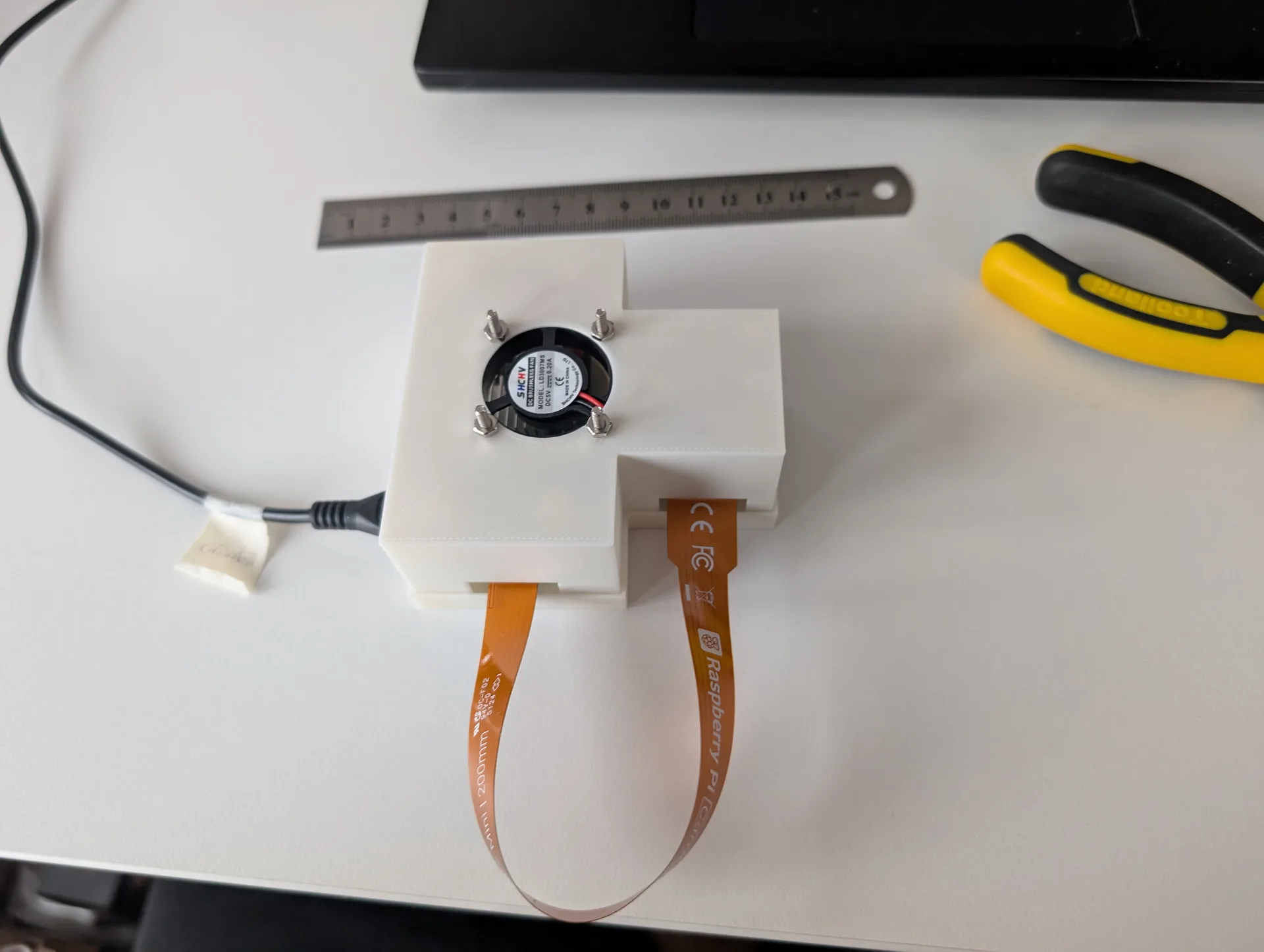
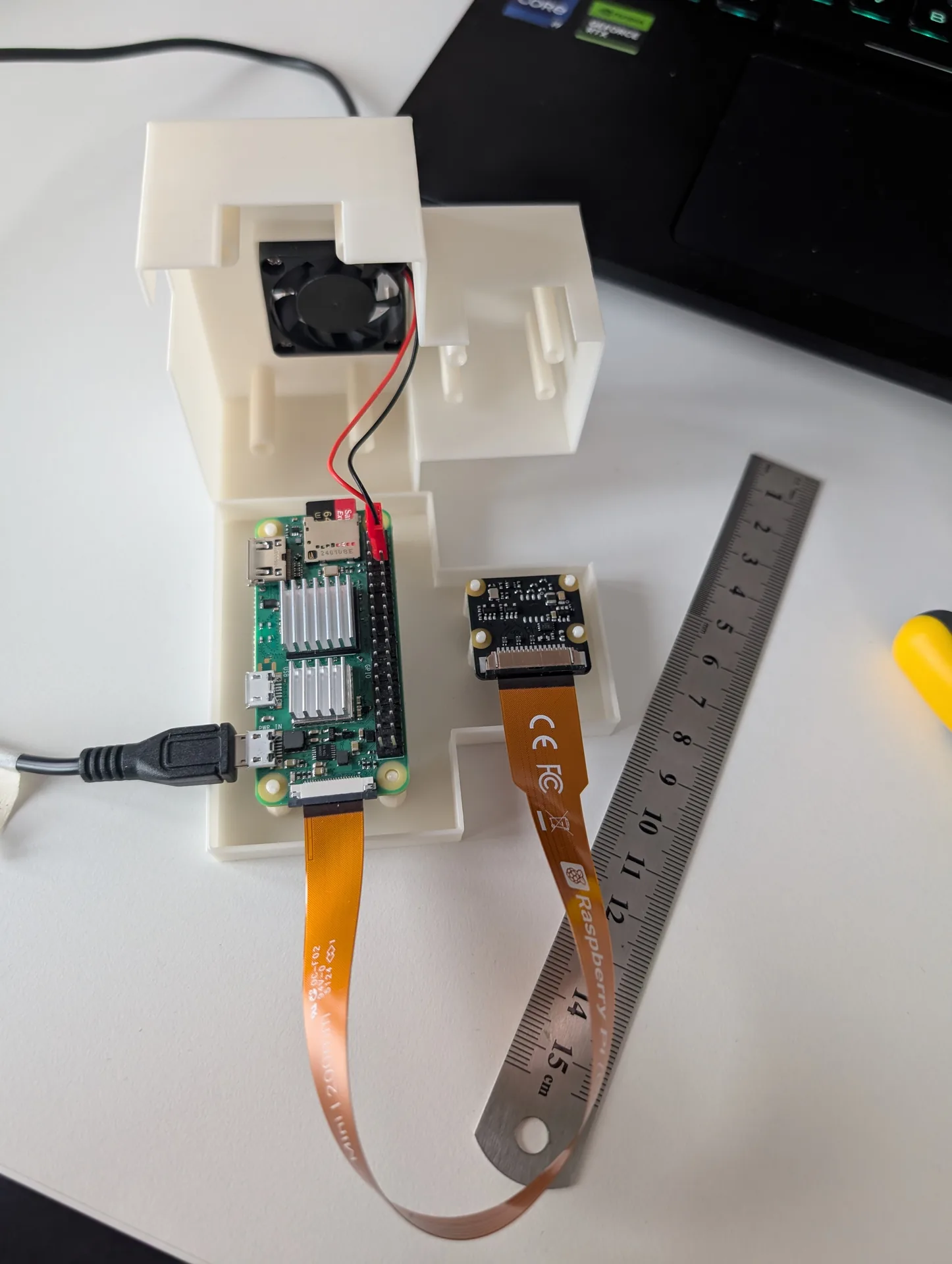
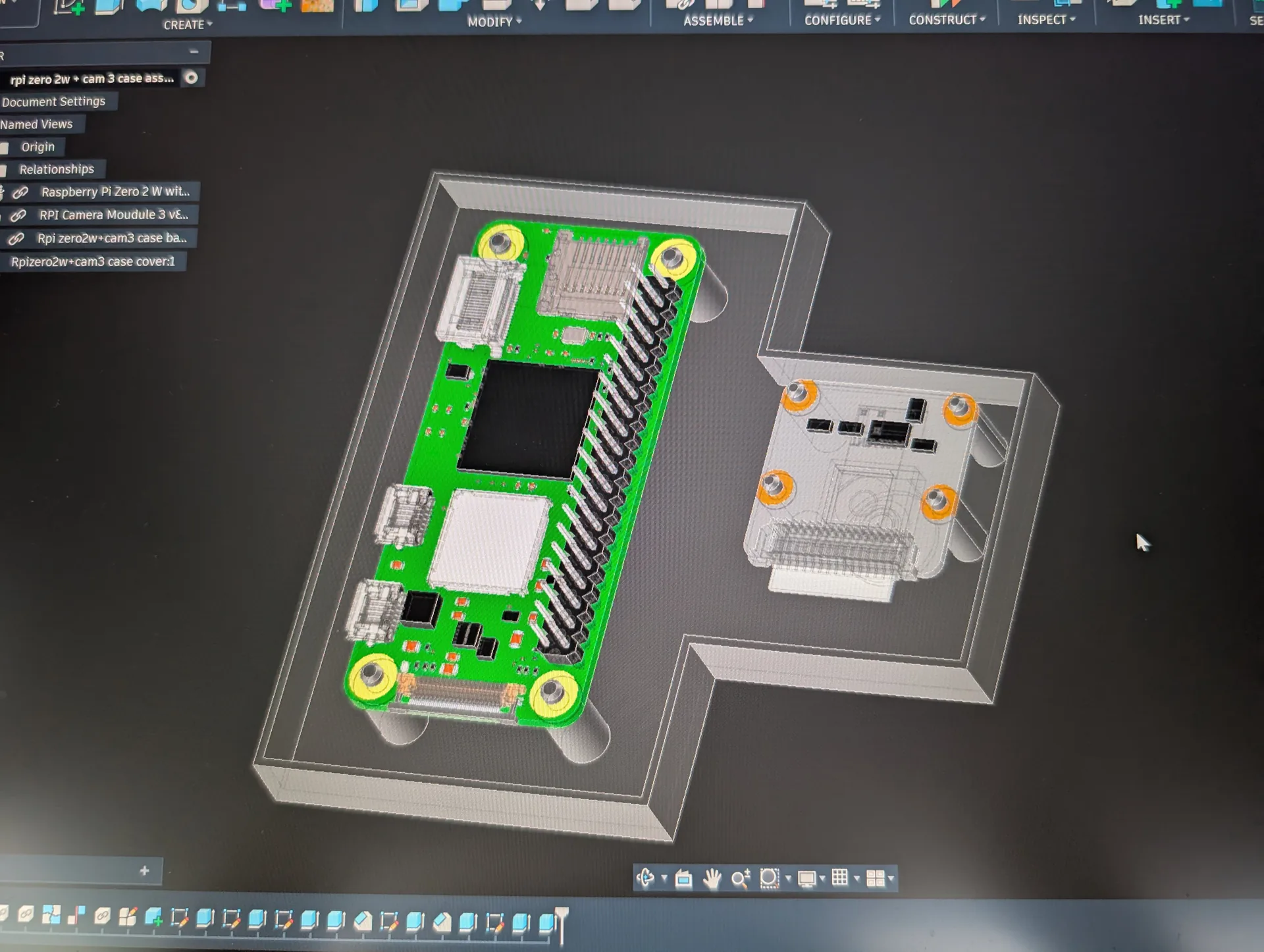
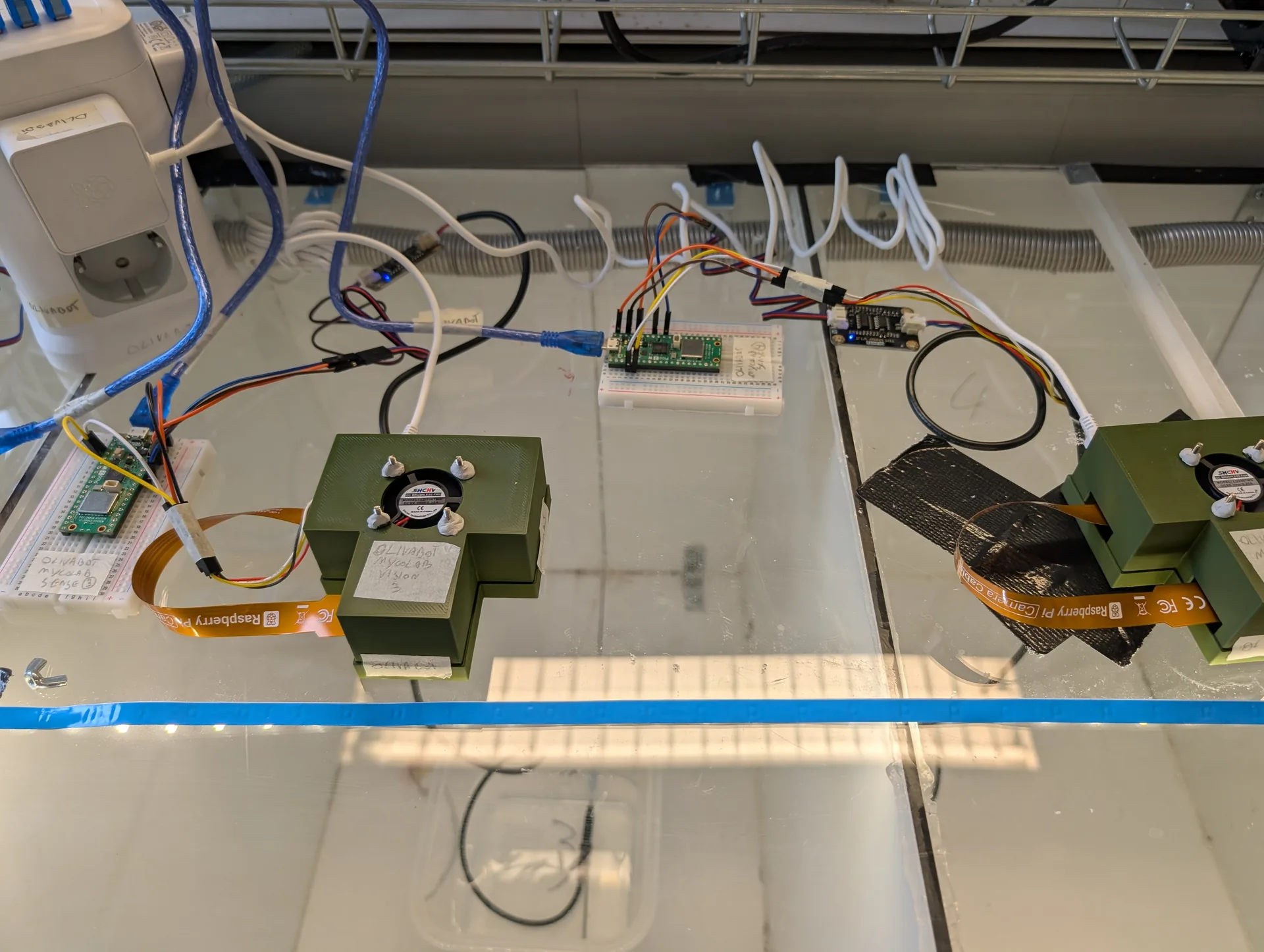
Myco towers
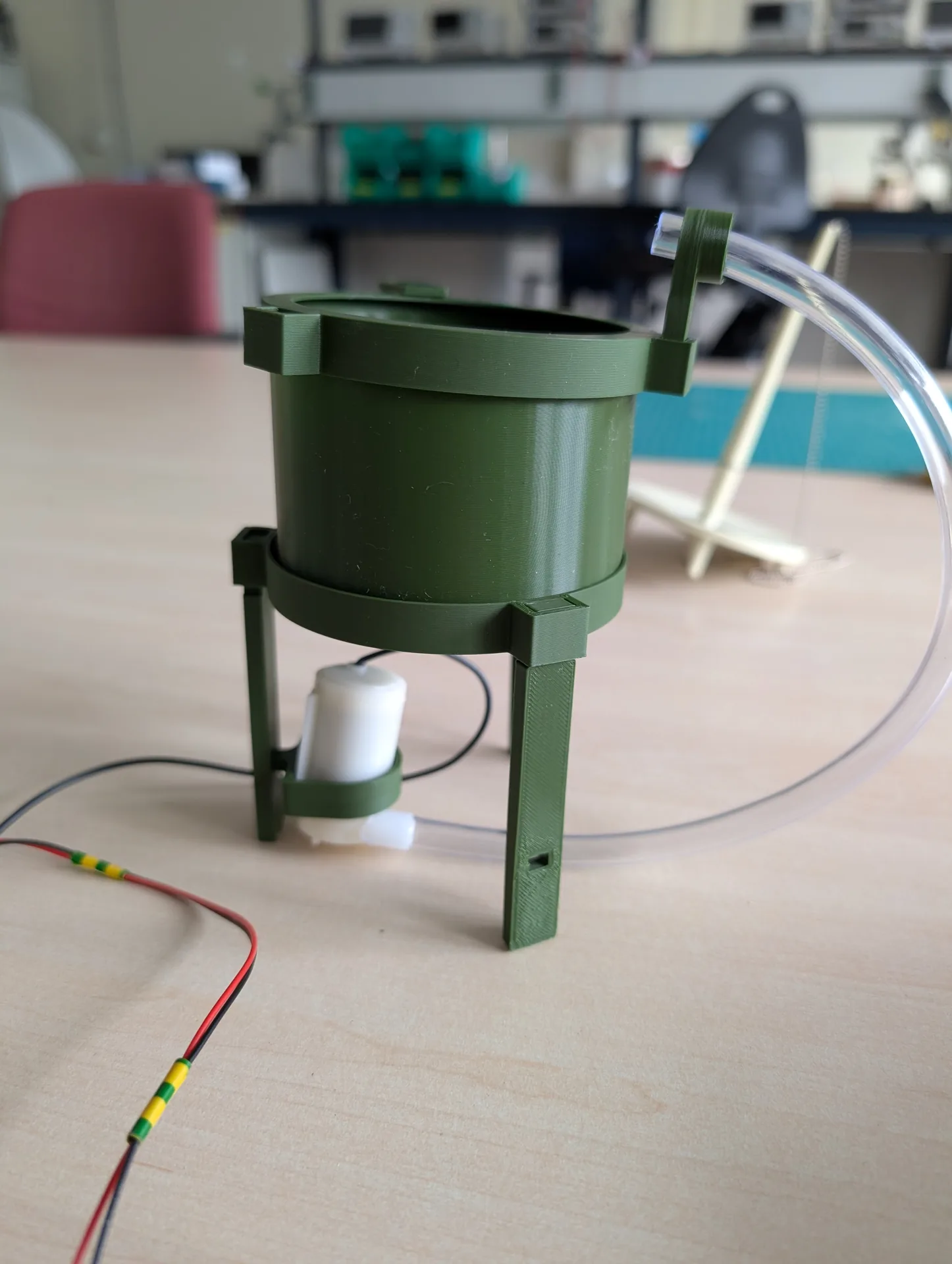
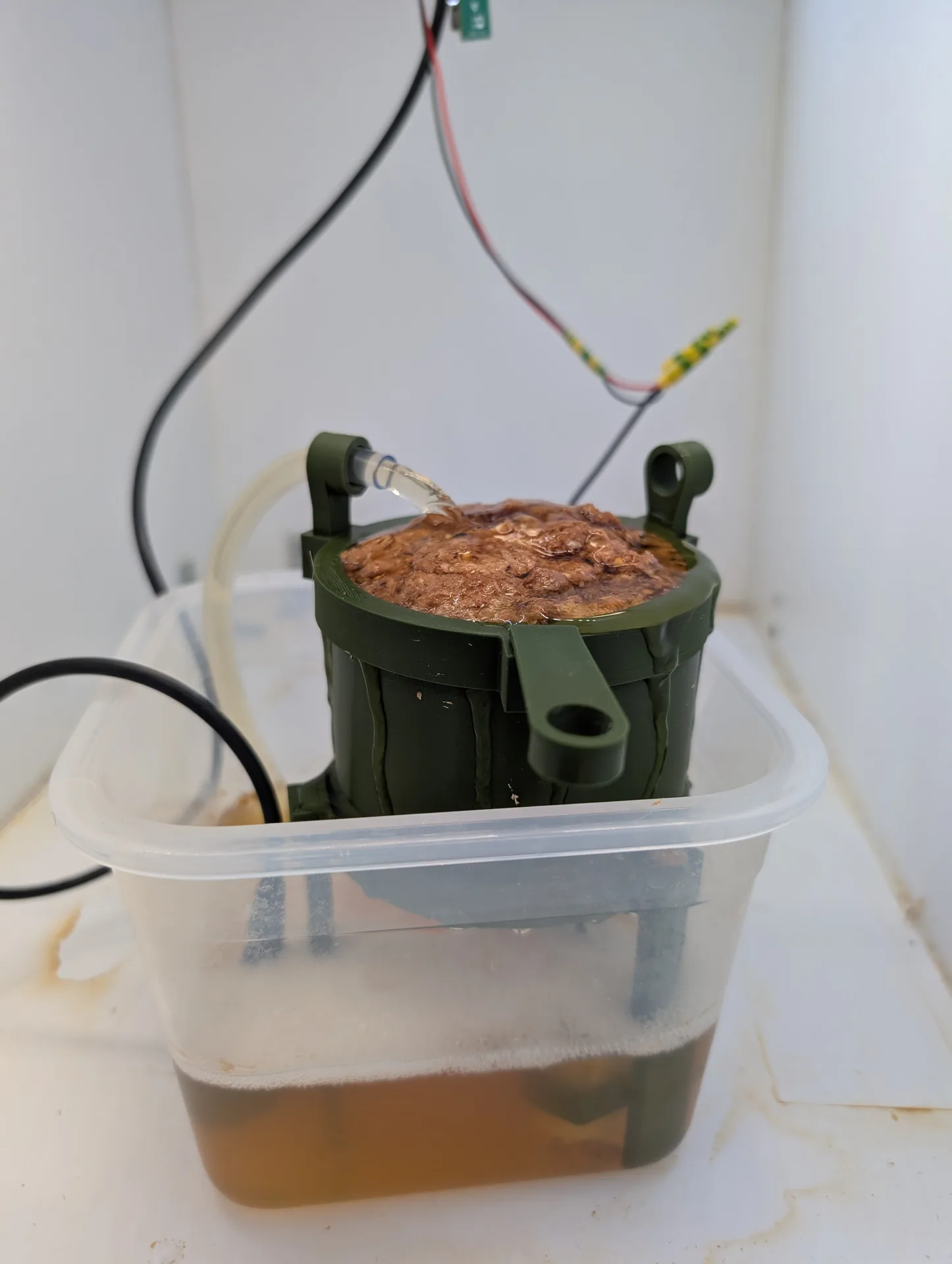
For smooth testing of water filters we designed and 3D-printed an improvement of Mycofarming MycoTowers — specialized containers for water filtration, connected with automated water pumps for continuous water cleaning. This miniaturized system is meant to test the working principles of mycofiltration, that is being applied at scale in bigger plants for industrial water cleaning.
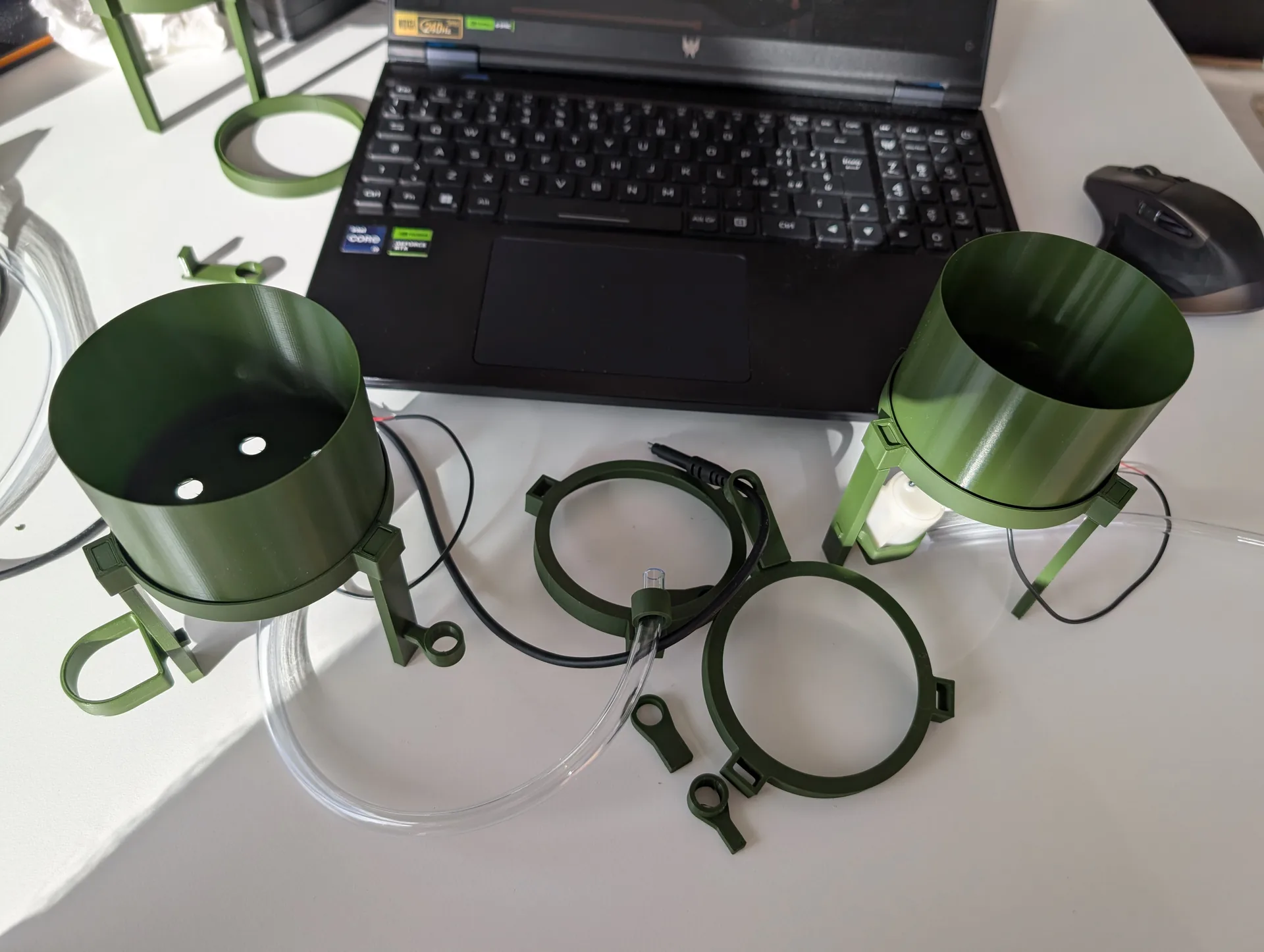
Outdoor LoRaWAN sensors
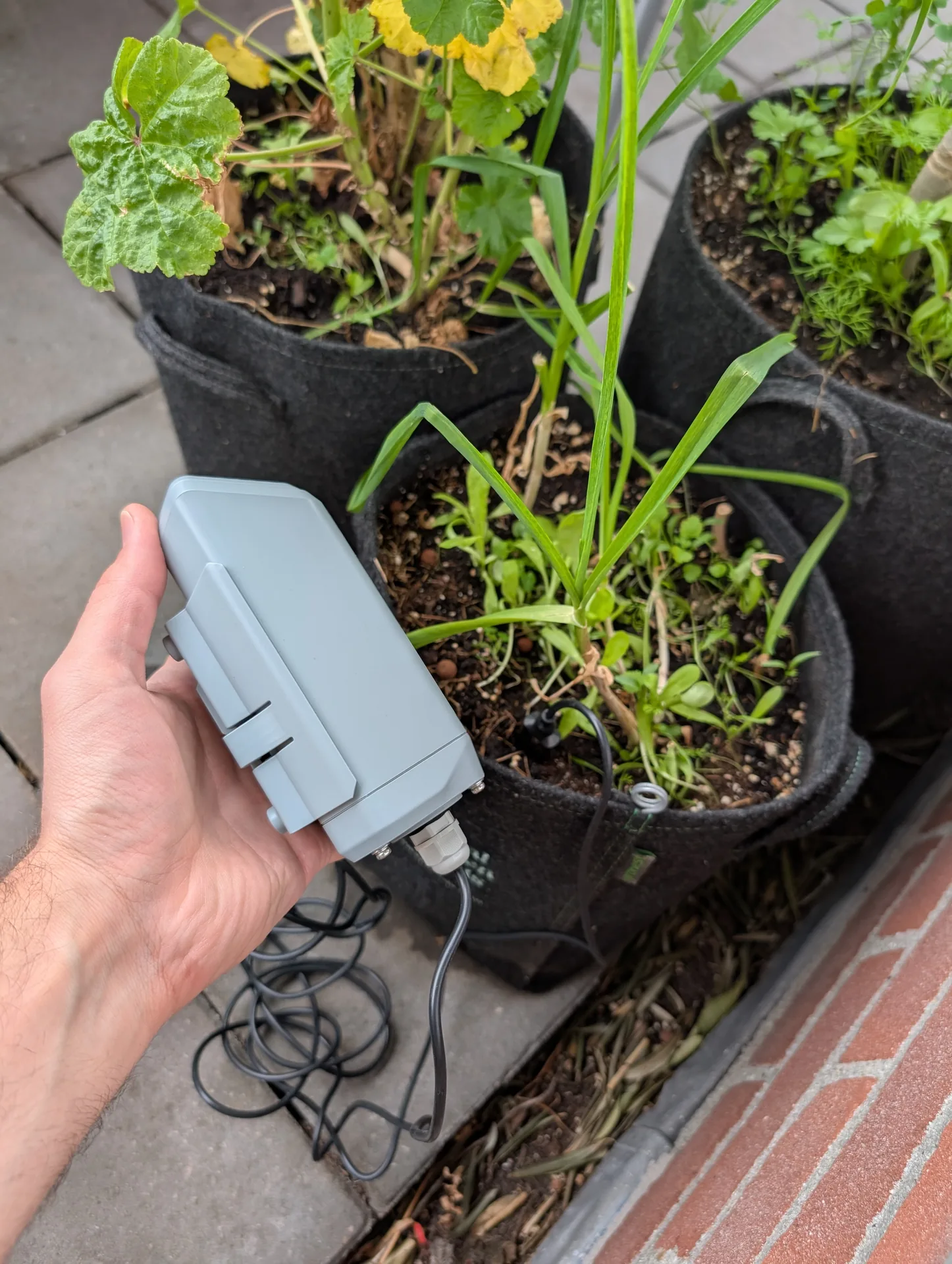
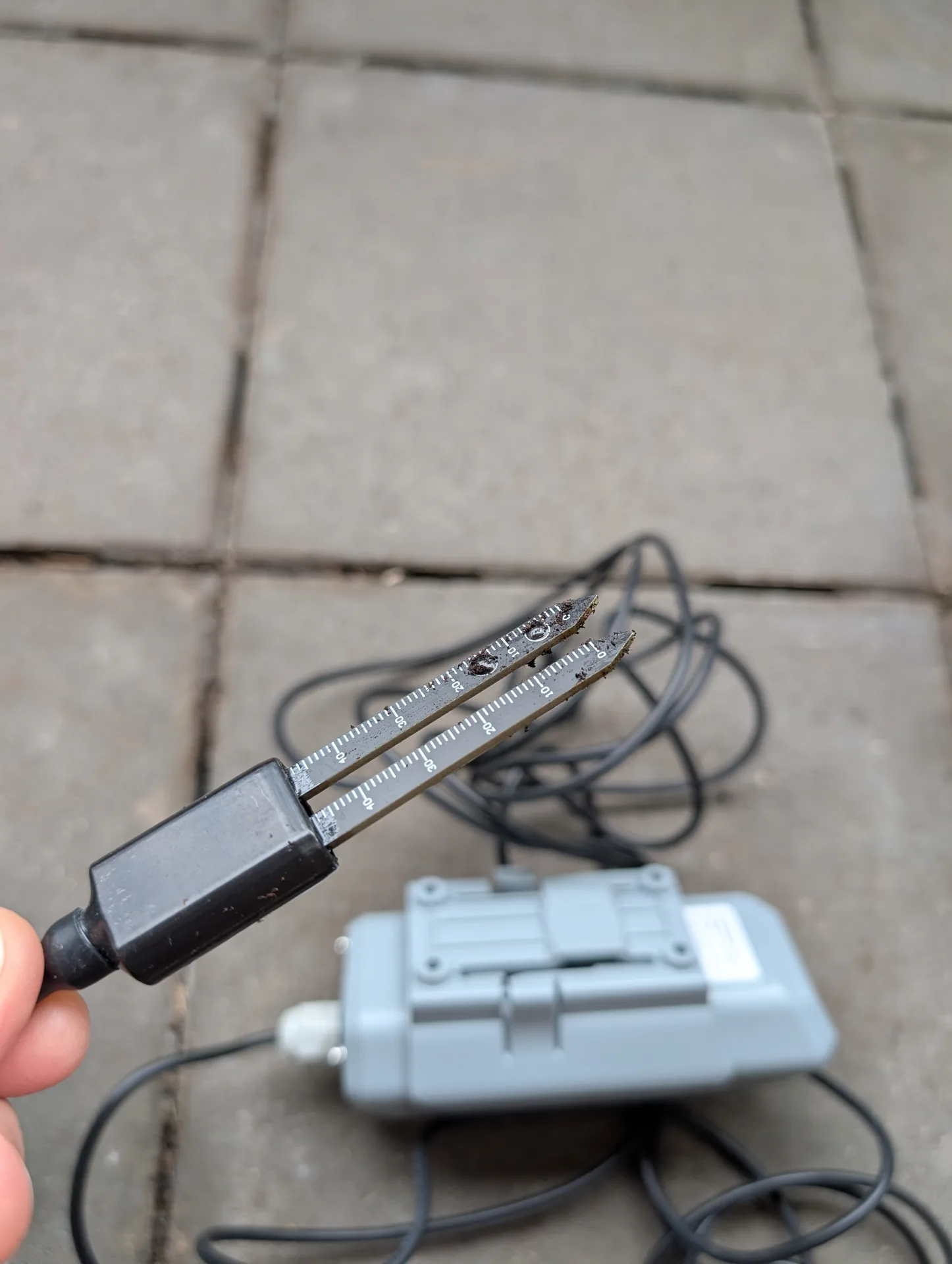
Other sensors that we tried are outdoor sensors, ending up with LoRaWAN-powered devices for soil moisture, electric conductivity, and temperature. These sensors have been applied to passive mushroom blocks placed in water streams for passive pollutant absorption, and always-on data collection — as the LoRaWAN communication protocol covers 100% of Dutch territory.
Why we kept going
Overall: a lot of work, little funding. Let me tell you — the Province of Noord-Holland helped a lot co-funding this project, but the other co-funding was in kind on our side, meaning only part of our work (about 30%) was paid.
We believe in sustainable technologies. That’s why for two years we made the effort of developing this technology for a better planet, cleaner water, and reaching the UN Sustainable Development Goals. This is our mission that drives our efforts and makes us stubborn to keep working aside from profit.
Thanks to Juan and Mycofarming, to KC Group for the subsidy path, to the Province of Noord-Holland, and to DLAB for the room where this started.
Work with us
Strip out the mushrooms and this is a fairly common problem: a physical process nobody can measure, indoors and outdoors, on a budget. If that is your situation, the pieces we built here are things you can hire separately — firmware and LoRaWAN for probes that have to stay on, infrared and camera work, CAD for enclosures that survive outside, and a dashboard on an EU server we can also run.
Email services@olivabot.com.
Gallery
MycoLab sensors and cameras, myco towers, outdoor probes.
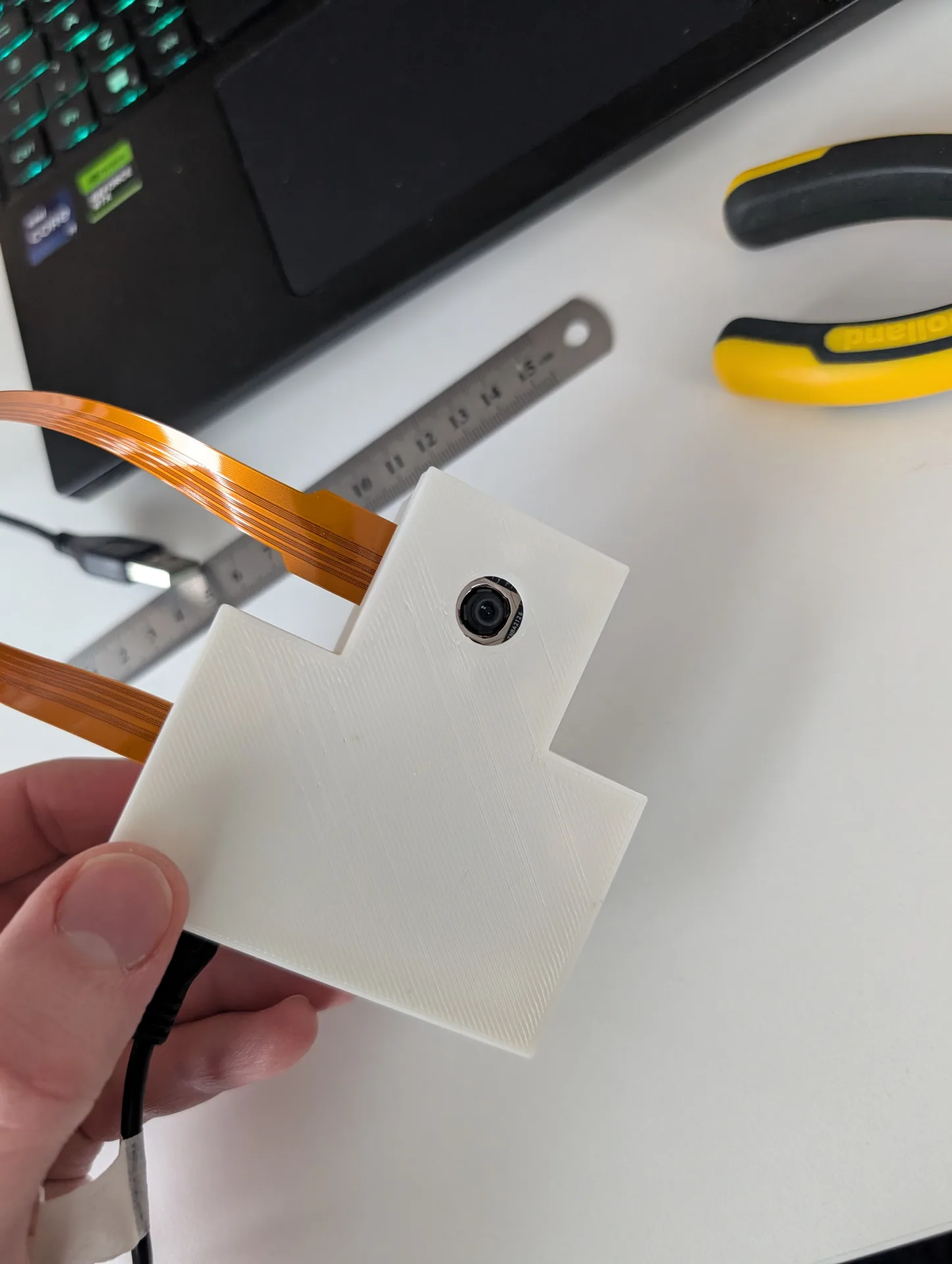
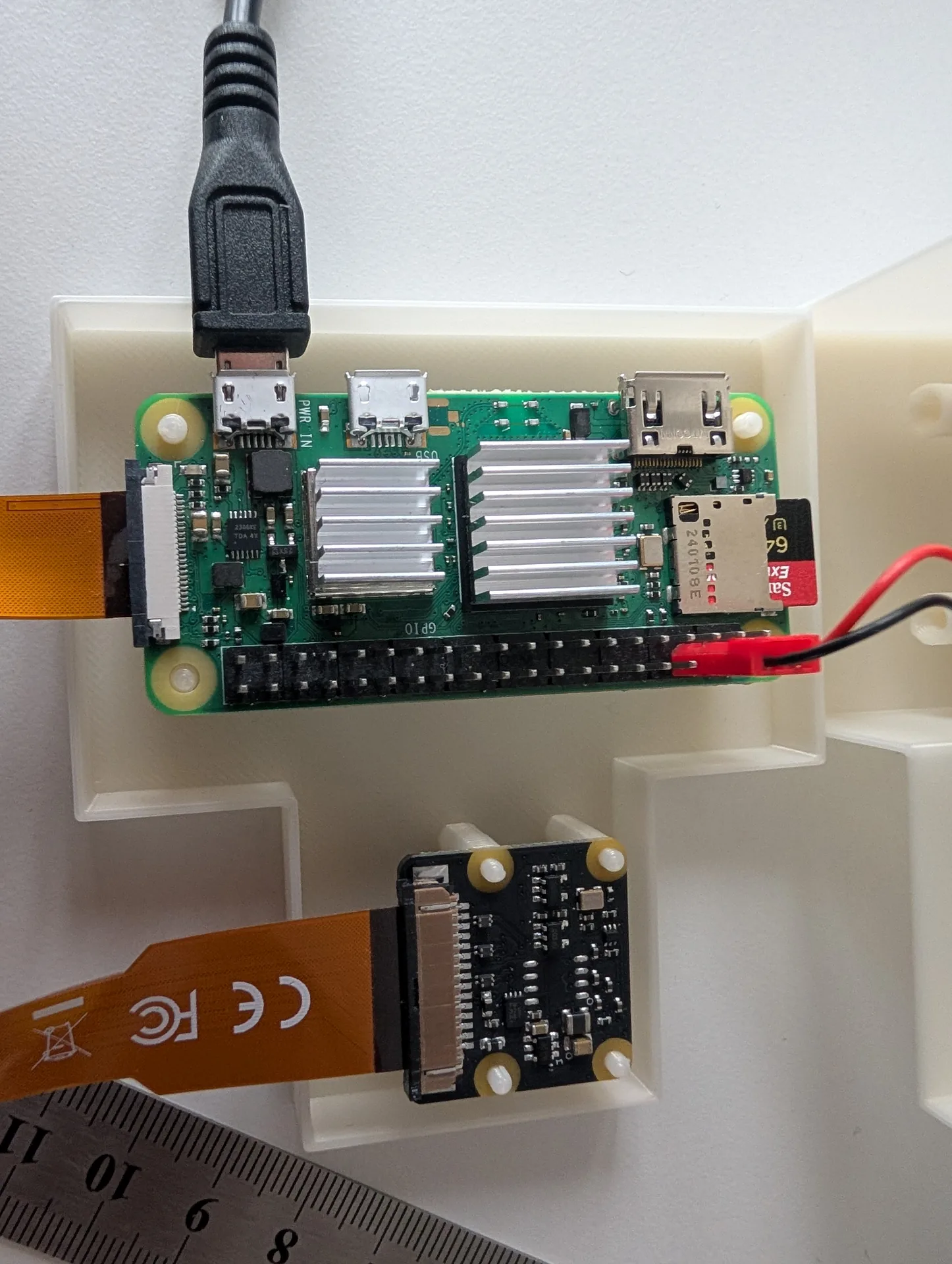
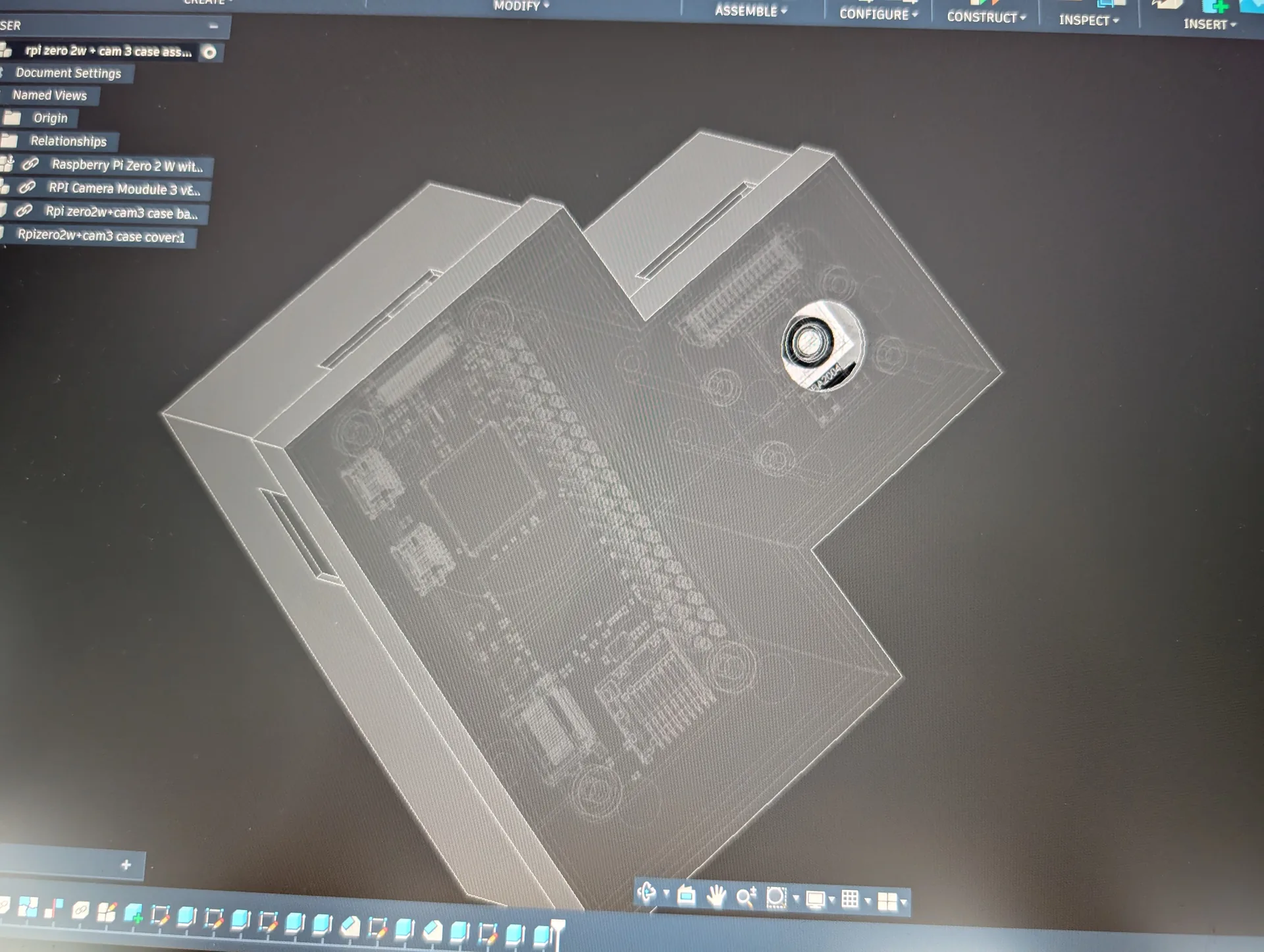
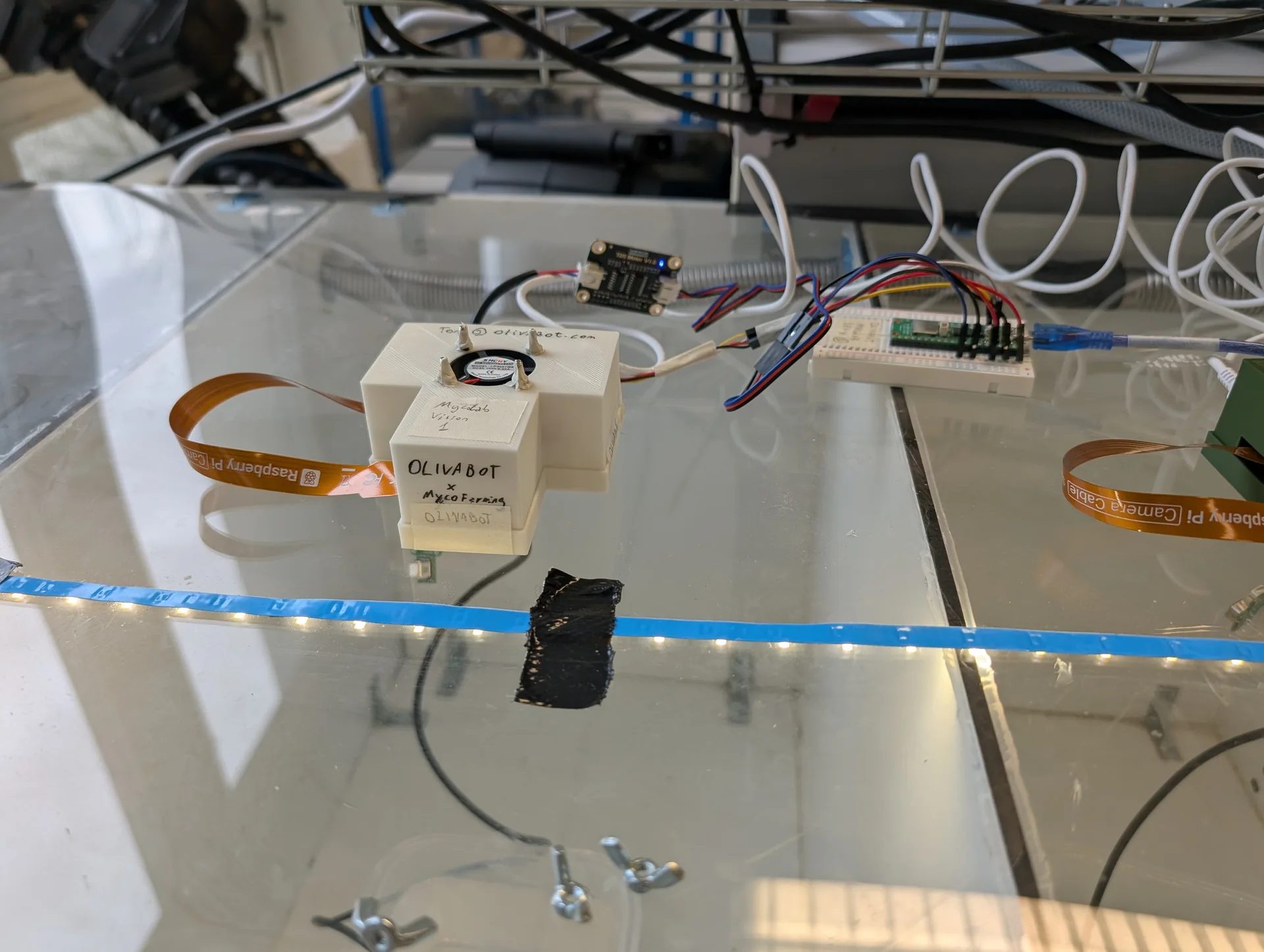
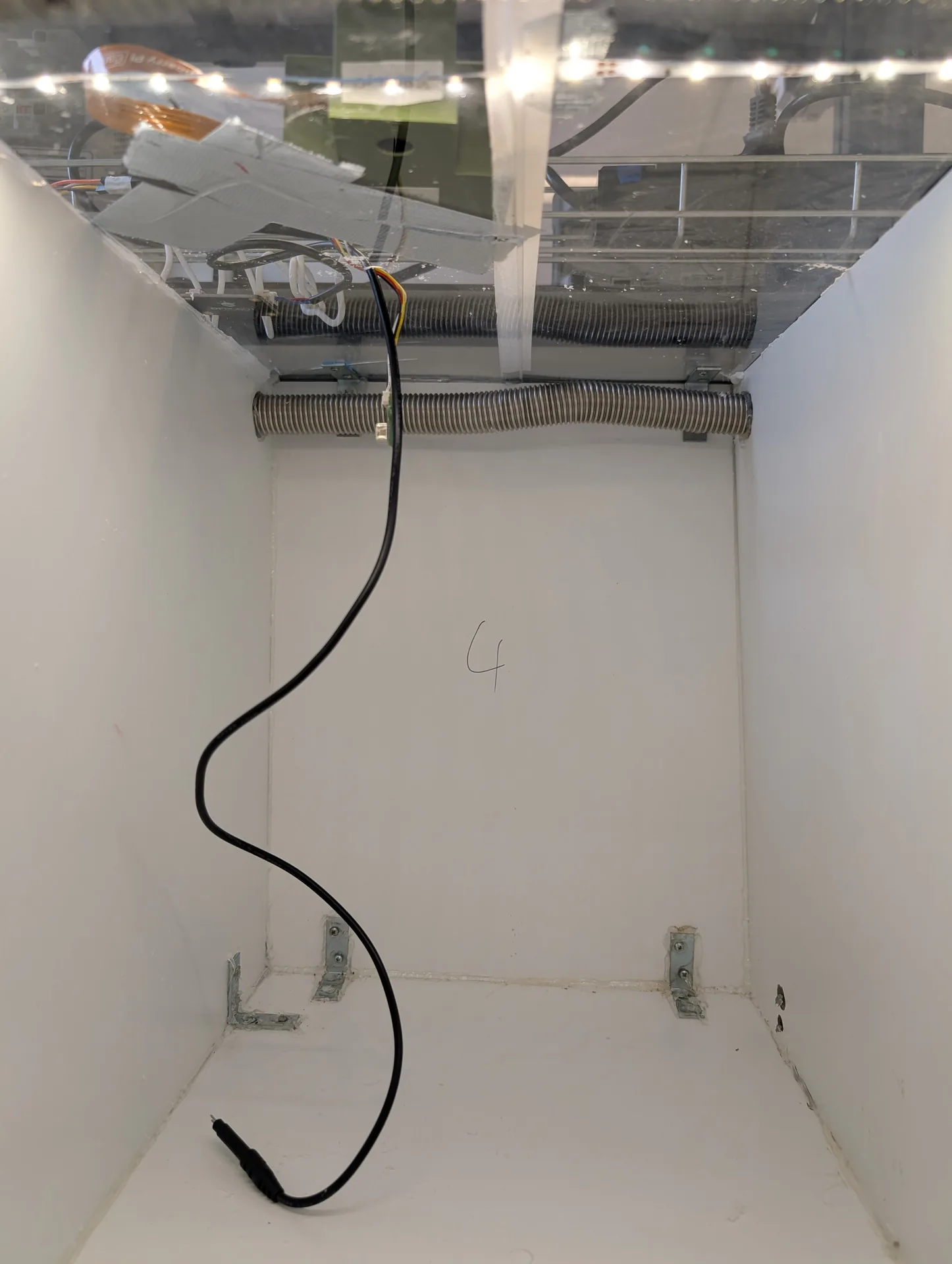
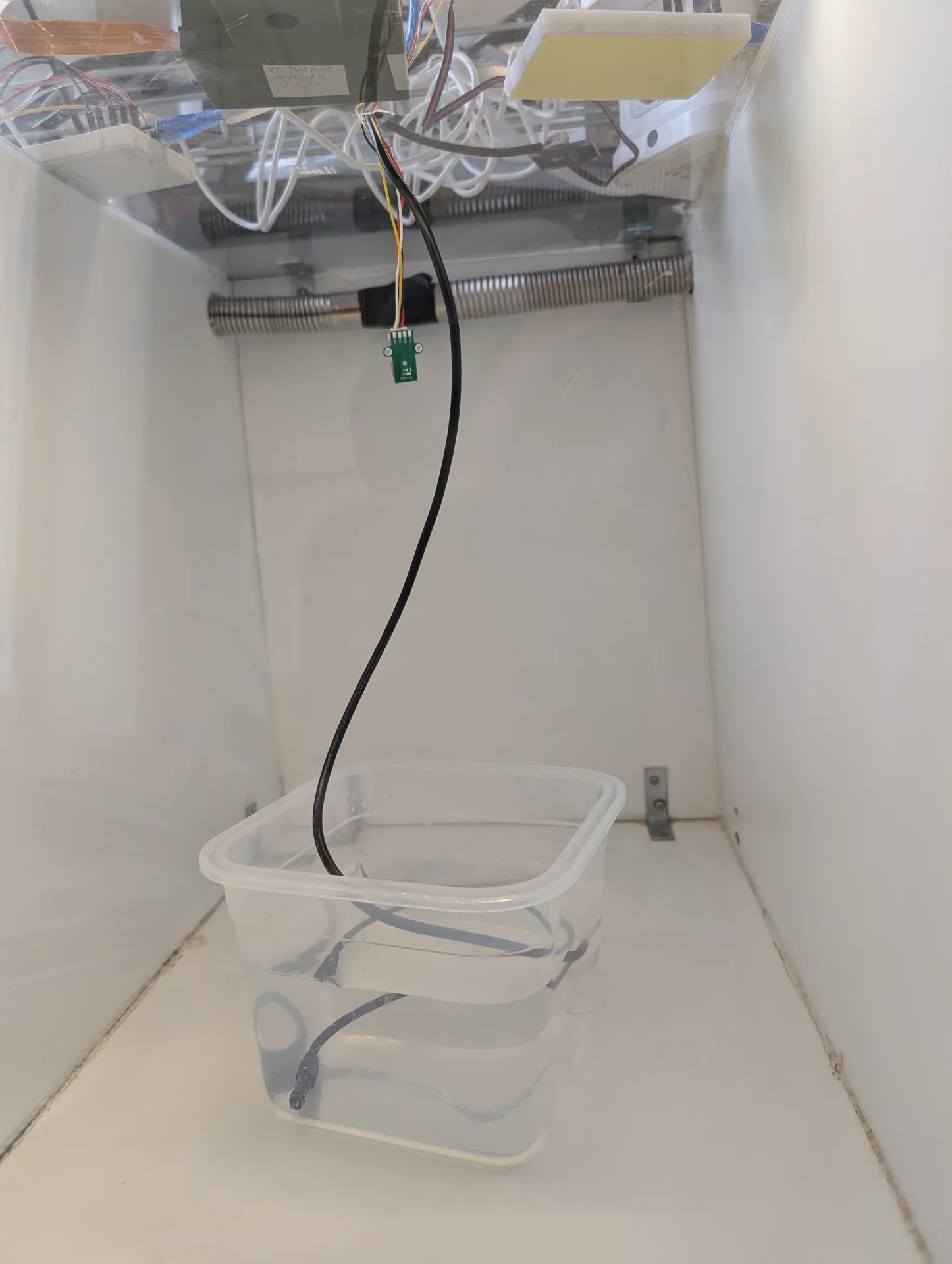
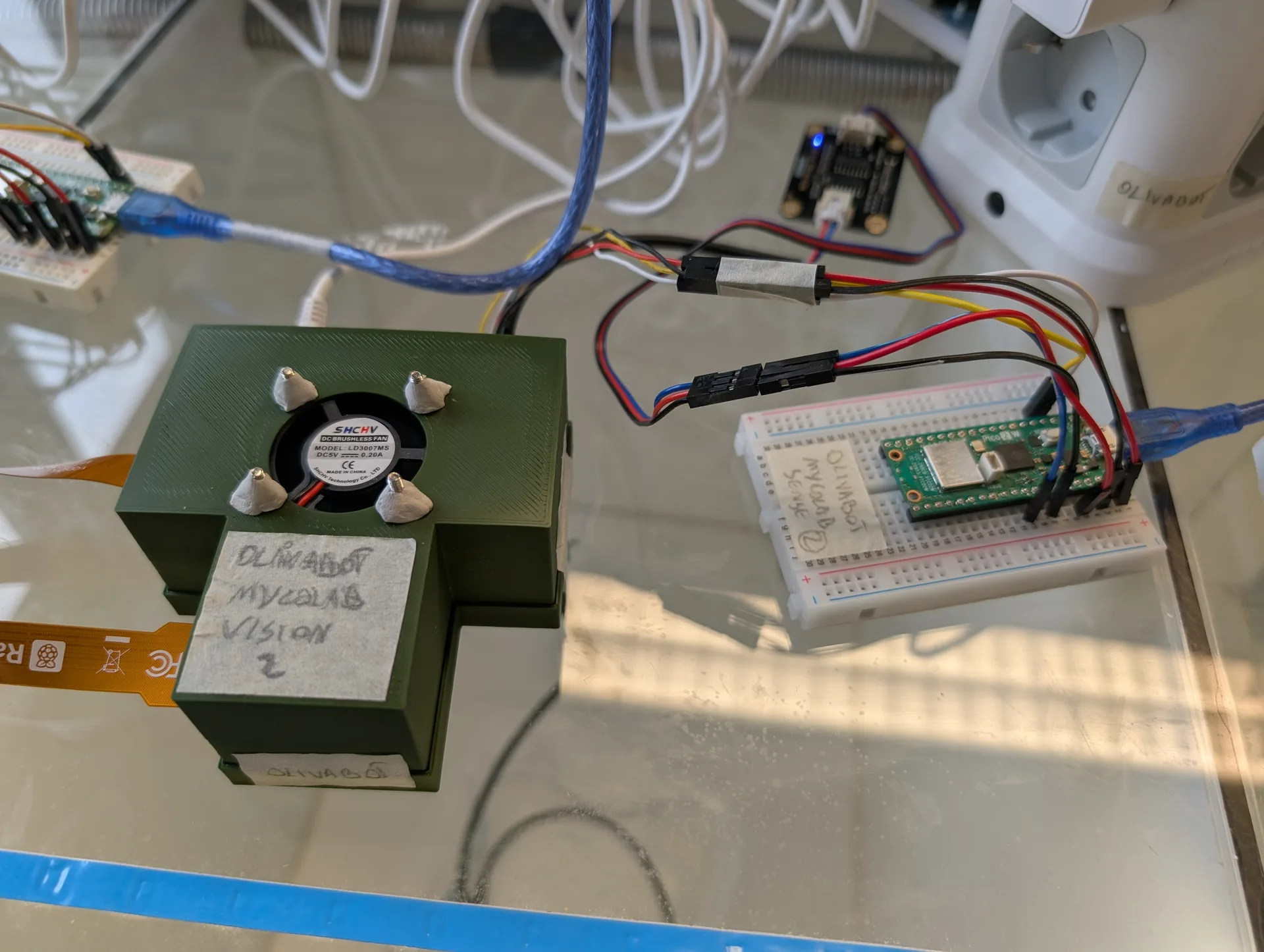
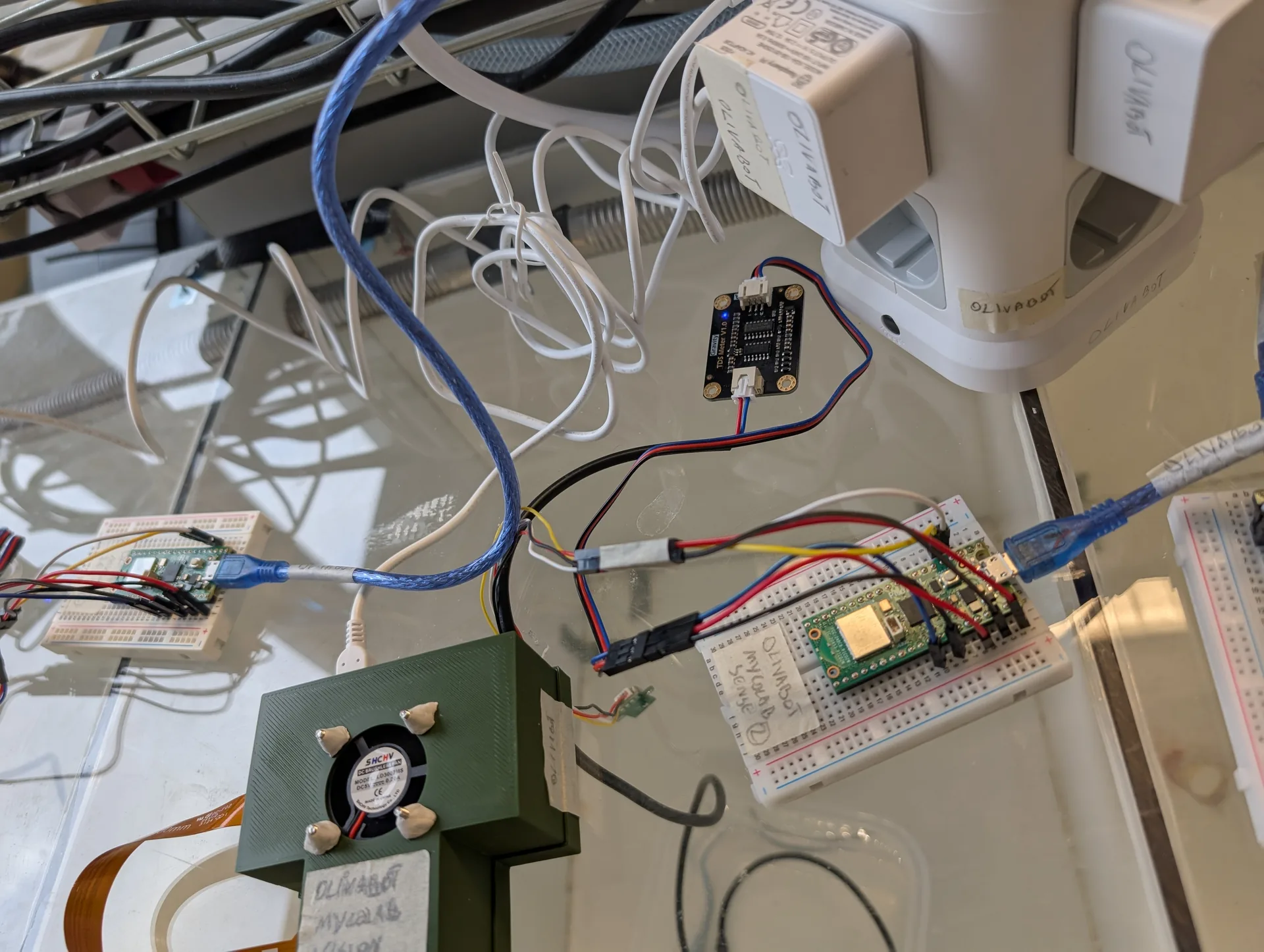
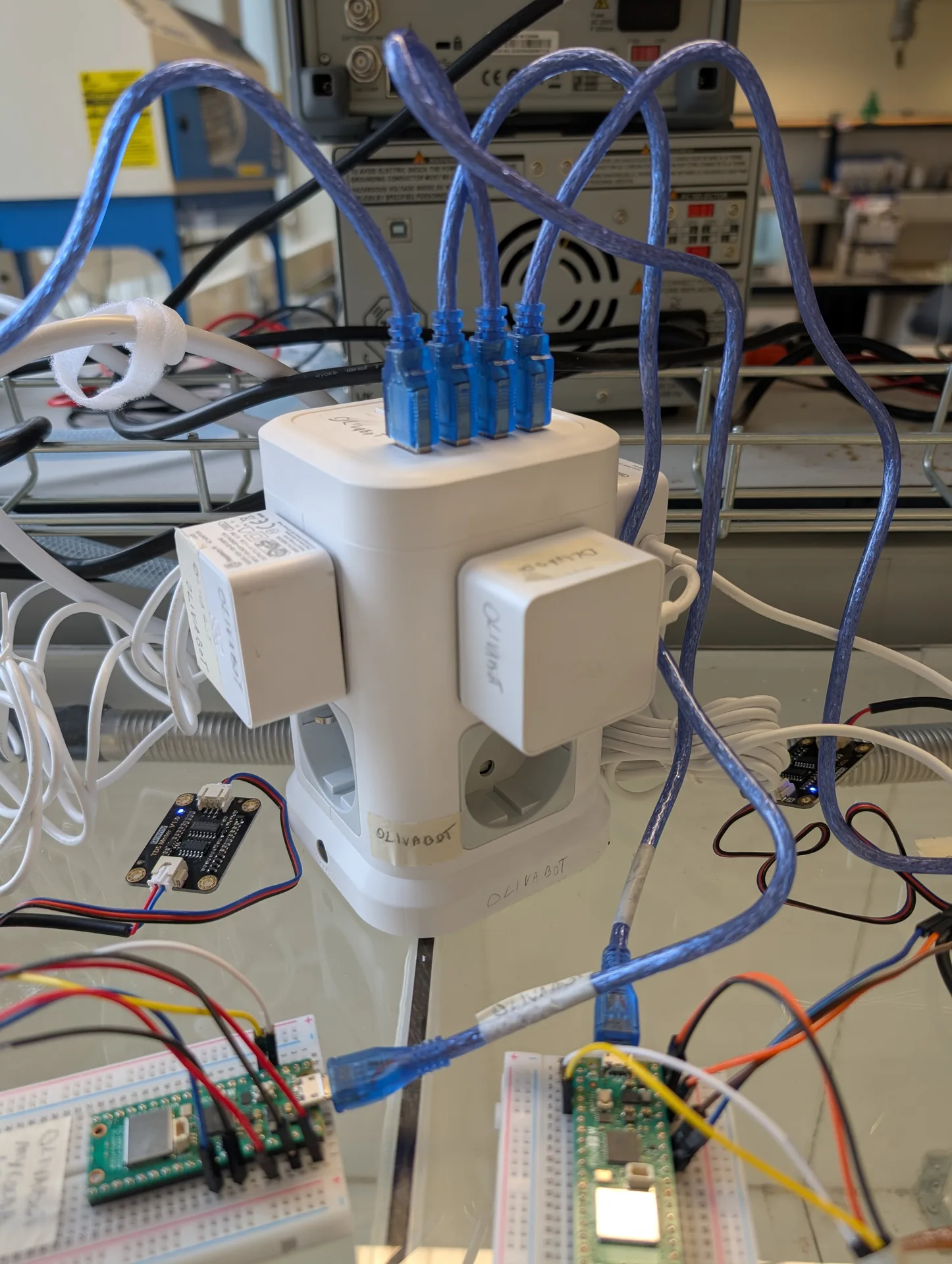
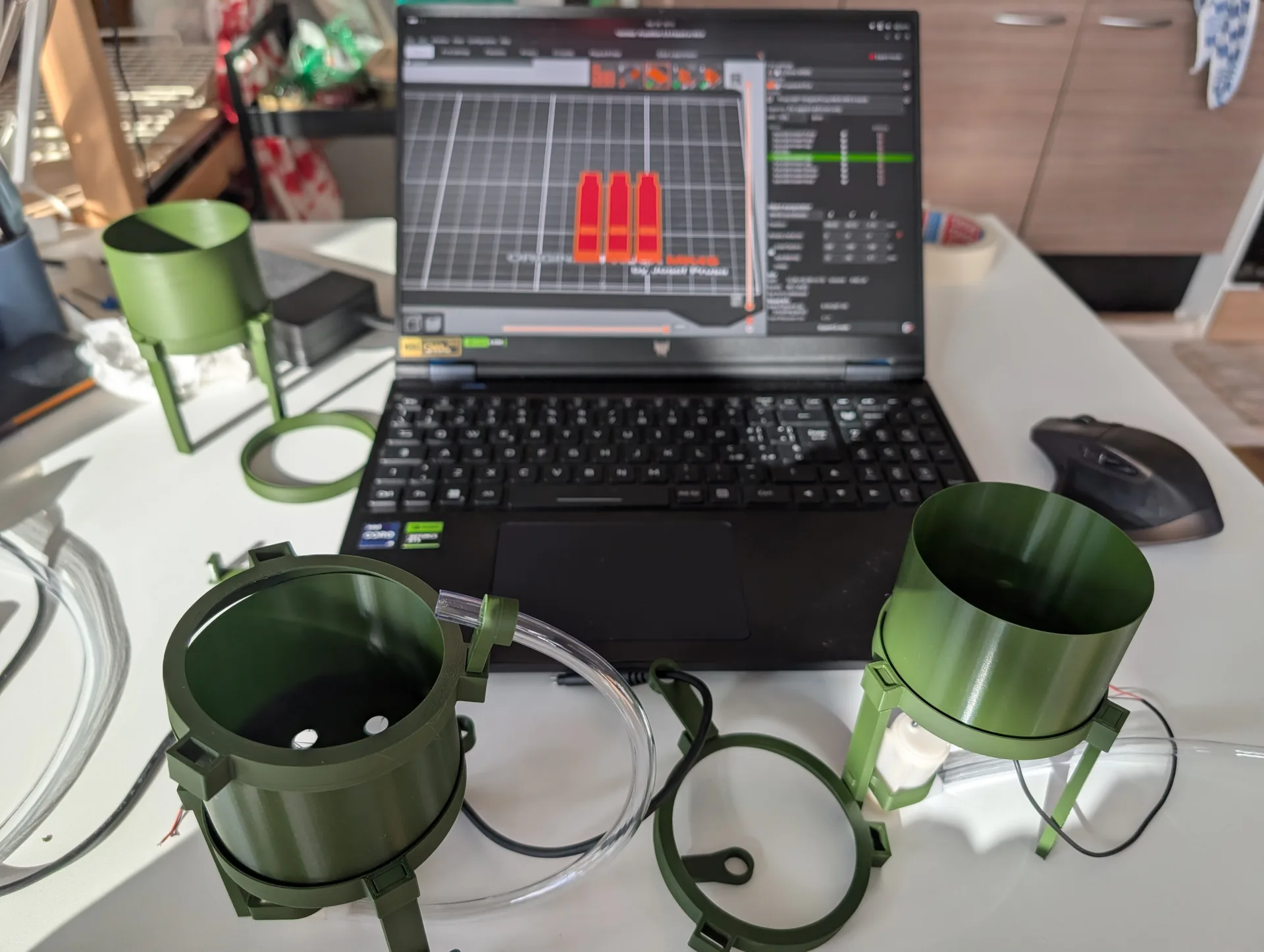
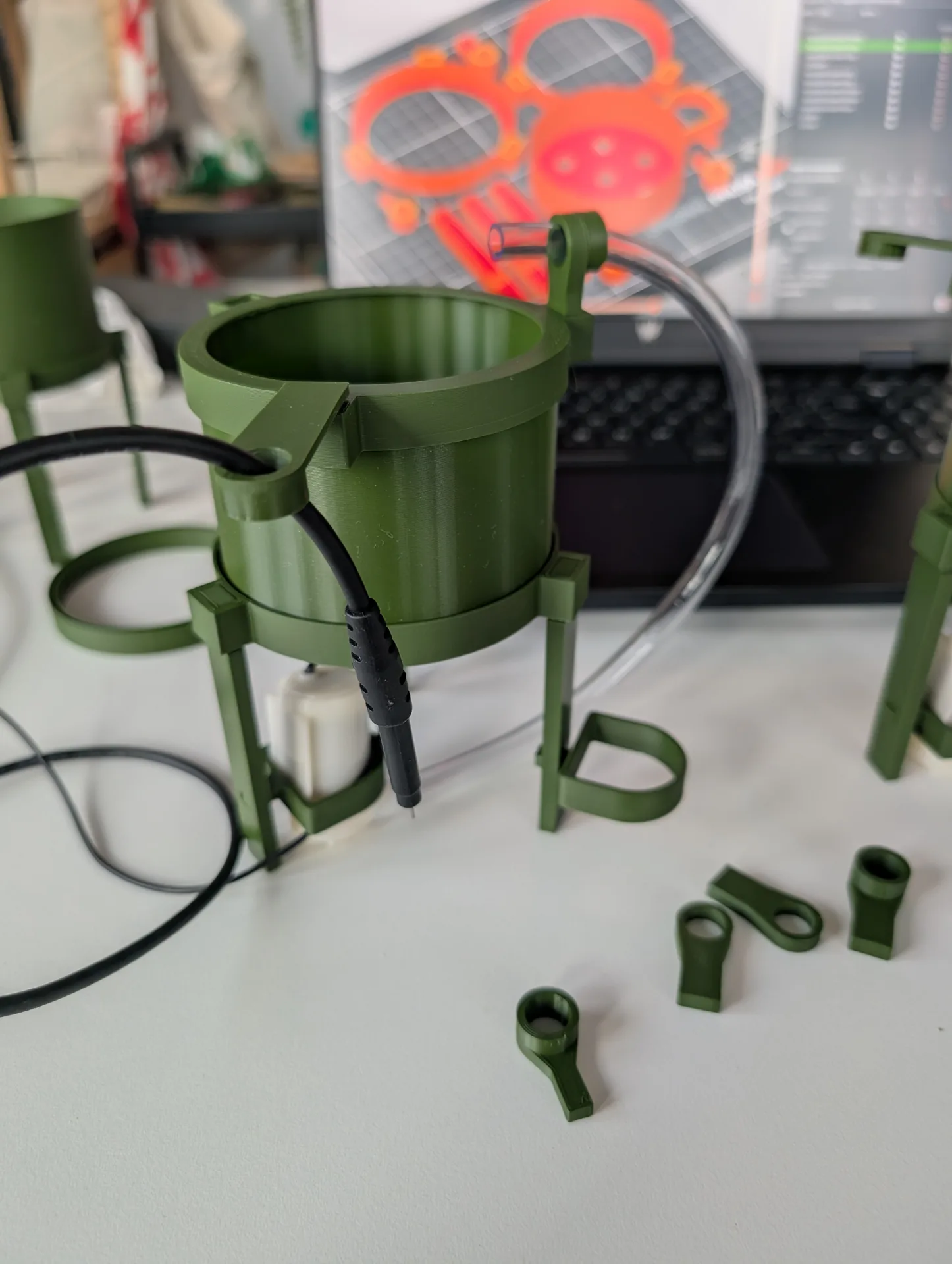
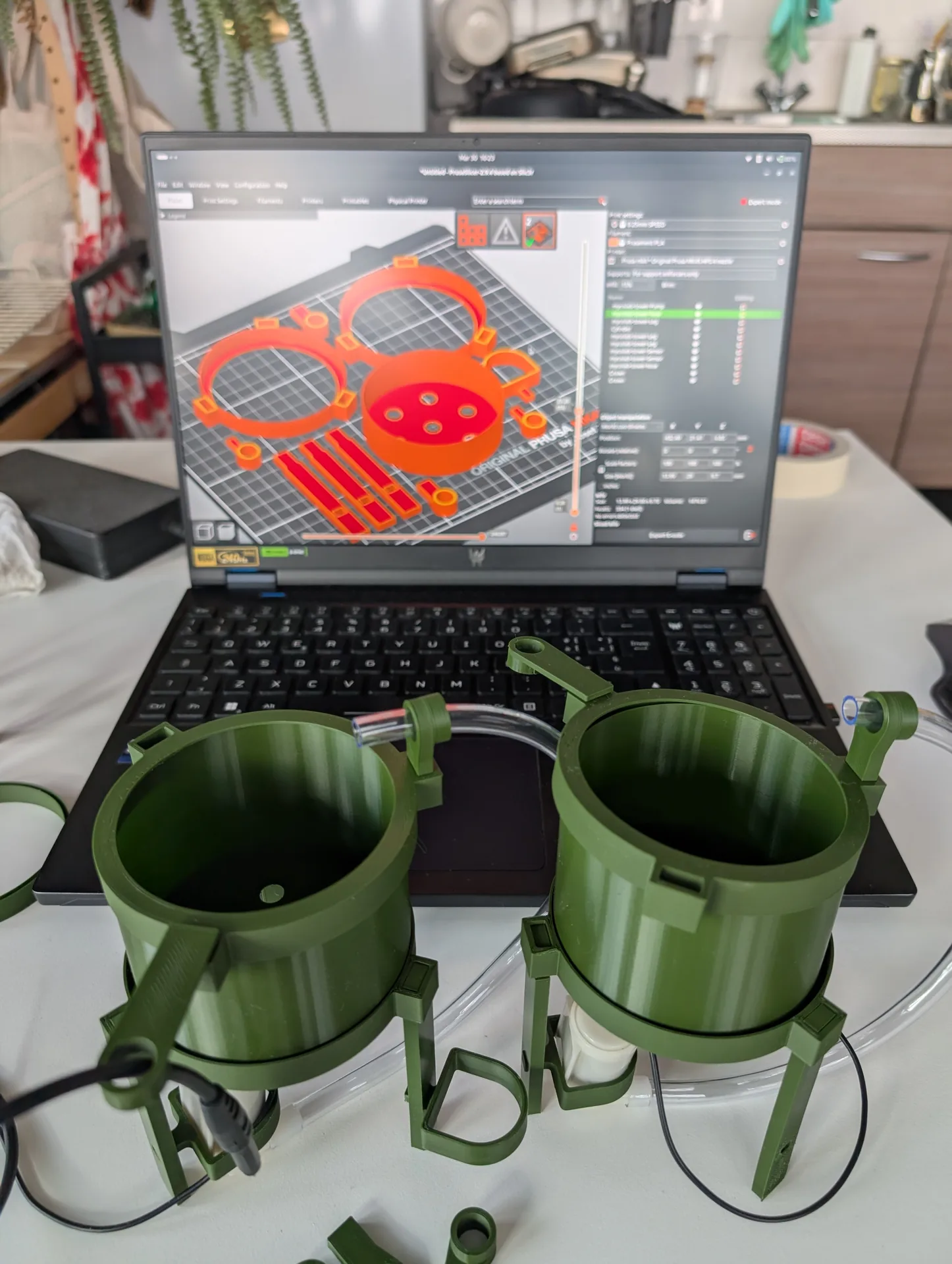
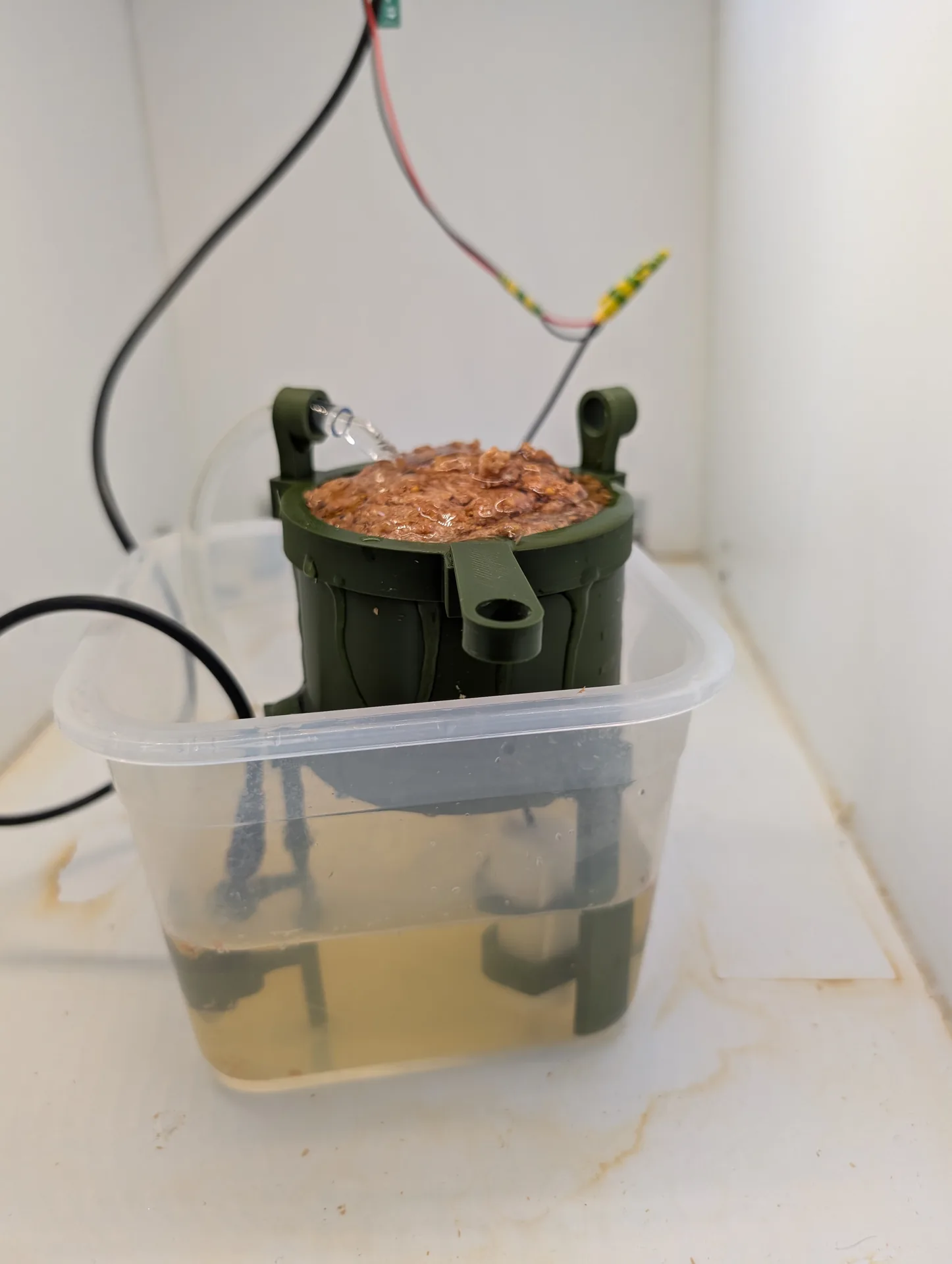
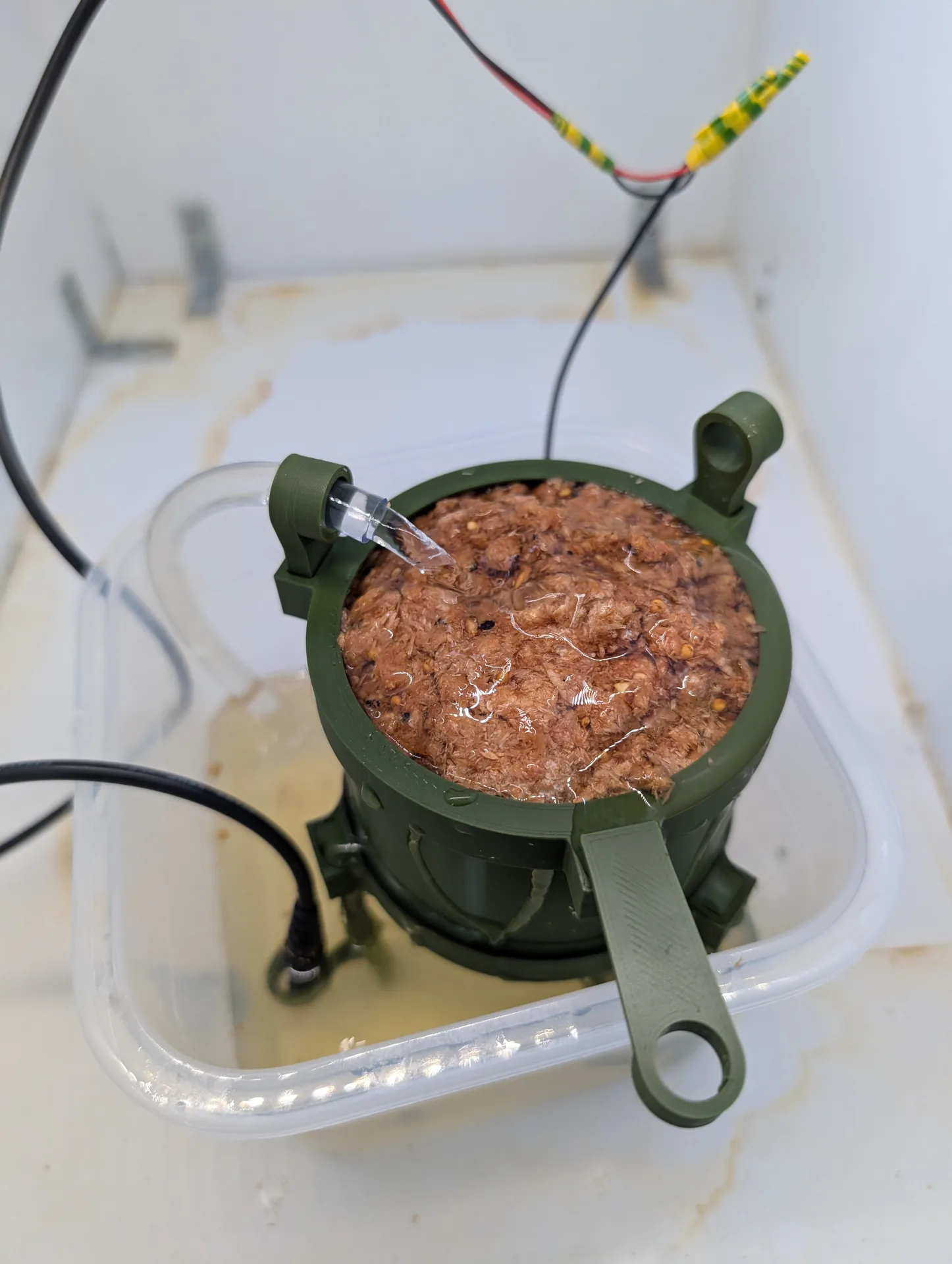
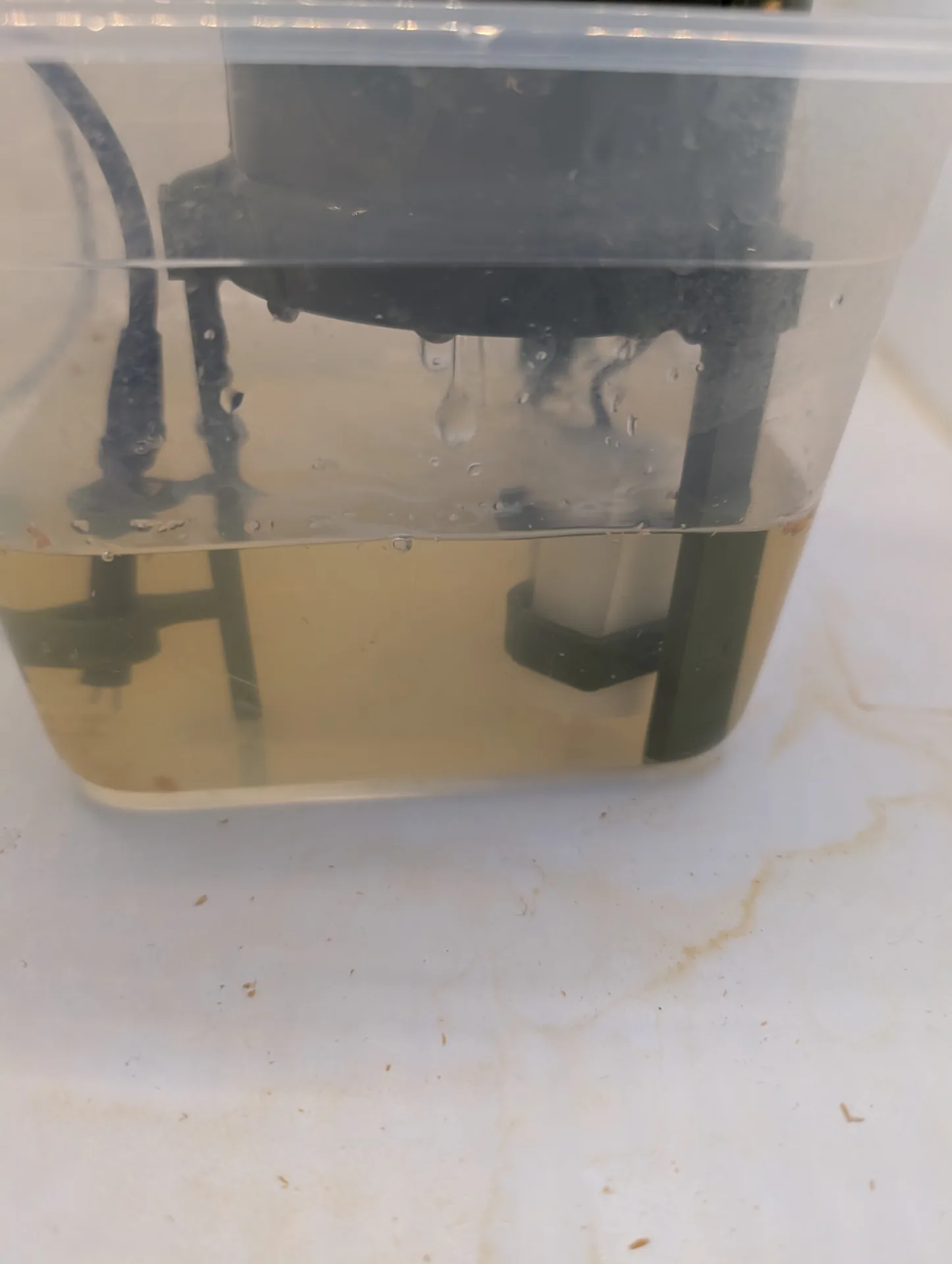
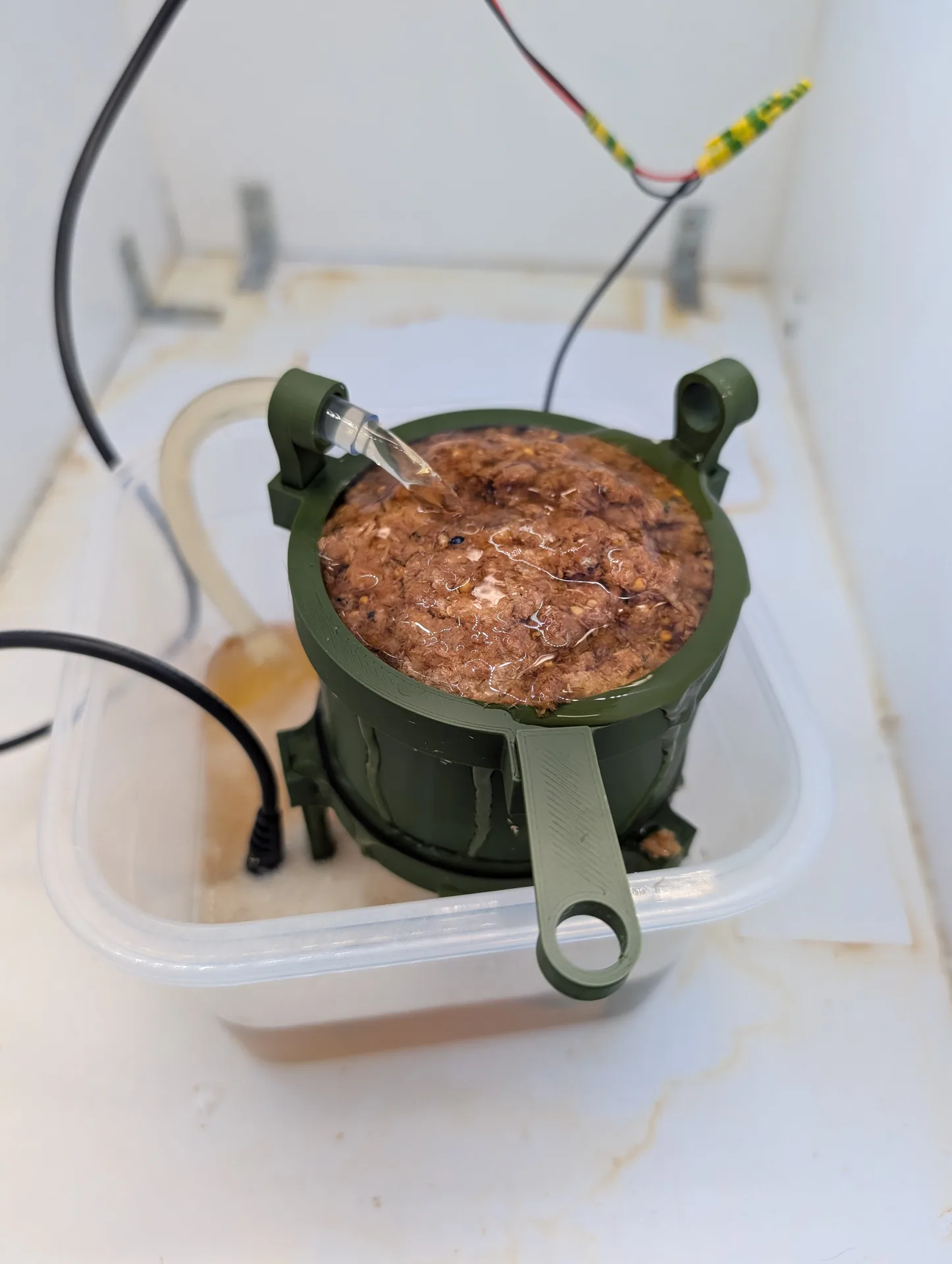
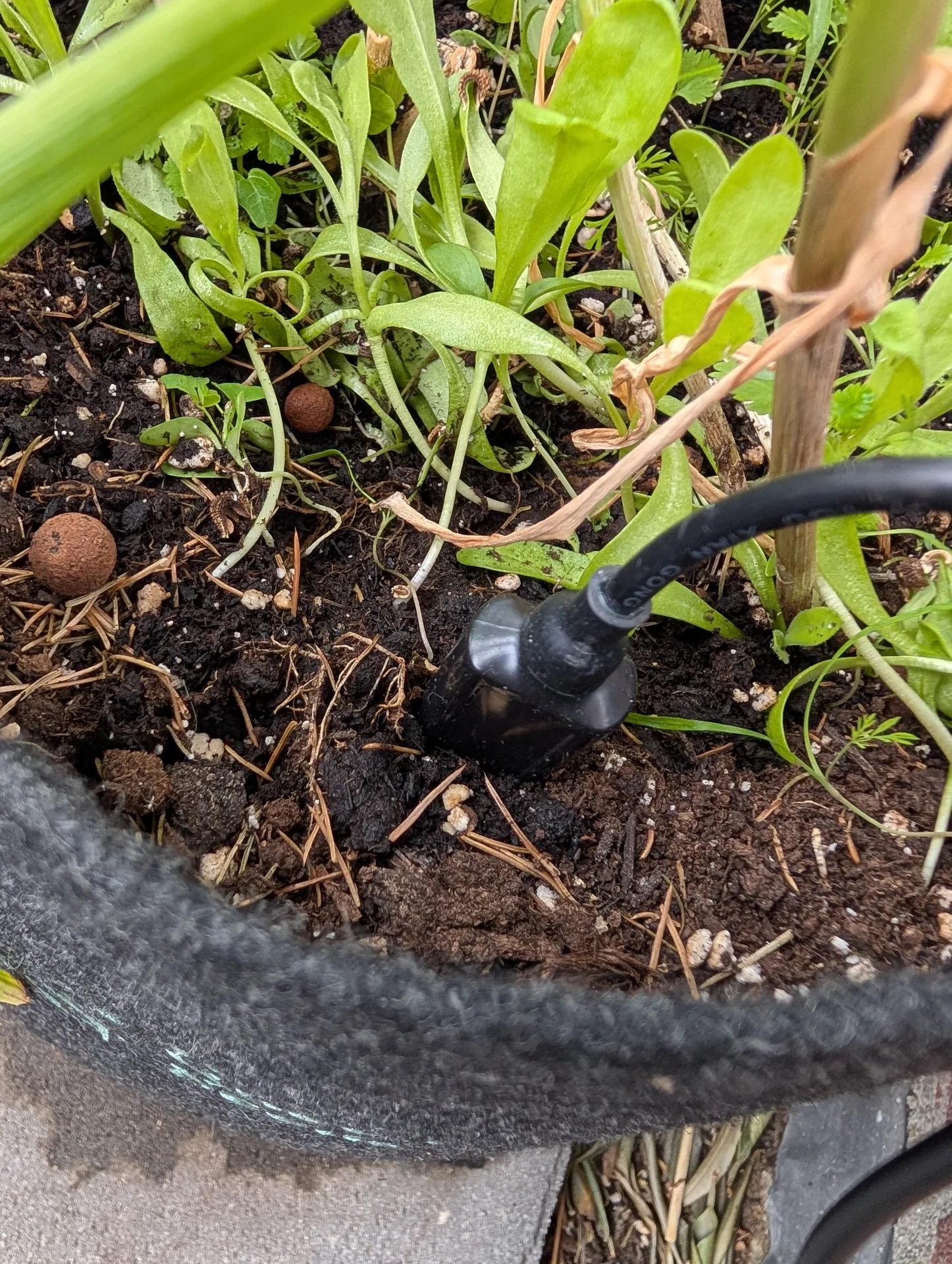
Mycosense with Mycofarming, 2024–2026. MycoLab, myco towers, outdoor LoRaWAN.
Same kind of work for hire: firmware (including LoRaWAN), sensor dashboards, computer vision, data review.