PLA tree gripper
Can we build machines of bioplastic that operate on trees? This gripper was an early yes on contact: printed PLA arms, hobby servos, a hug on a trunk. Not a climber.
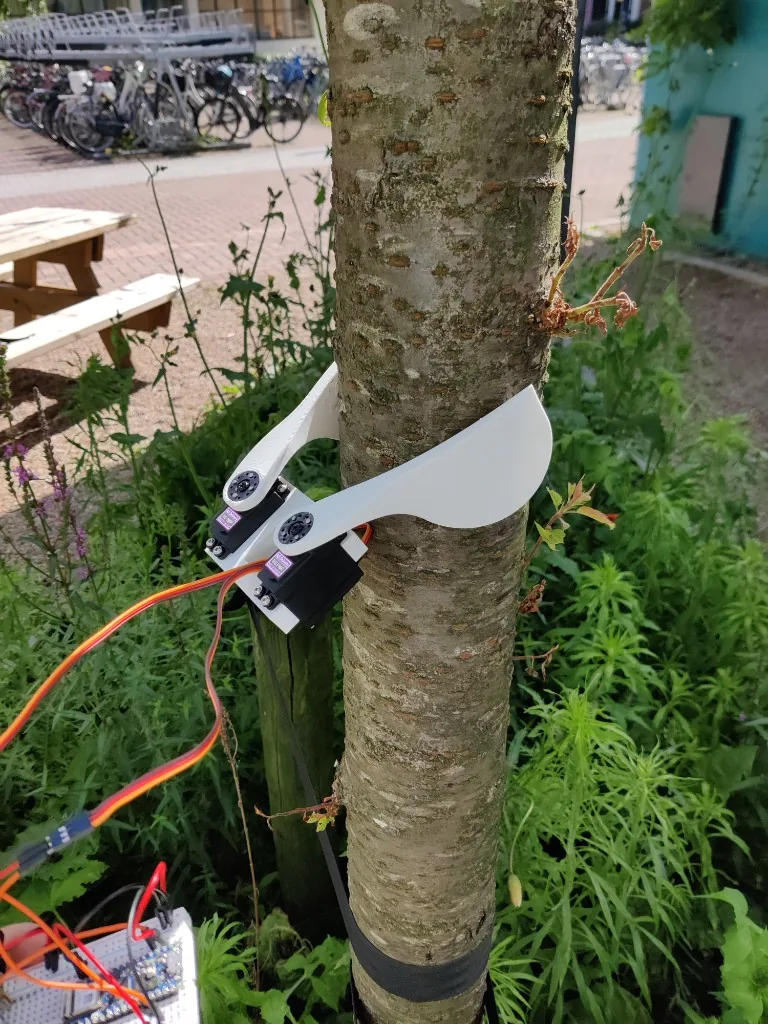
A retired first prototype, June 2024. Desk at Demonstrator Lab Amsterdam, then a tree at VU StartHub. Proof we can hang a mechanism that touches bark with a biological plastic and stay there.
Why bioplastic
Metal on a living tree is a bad idea. It scars bark, snaps small branches, and those wounds let in disease — fungi, bacteria, viruses. The tree pays for the clamp.
Ordinary plastic is lighter, and it pollutes. We did not want a machine that sits in a canopy and sheds petrochemical junk.
So we printed PLA — a bioplastic — and asked a narrower question first: can the part that touches the tree be biological material, actuated, and still hold? This gripper is that test. Two curved printed arms, servos, a trunk. It is not the last material we will try. It is the first that made the point on a real tree. In July a tiny climber with squirrel-claw microspines gripped a campus branch — then proved too small to carry batteries and harvest mechanics.
In the lab
Phone clip on the desk at DLAB, 10 June 2024. Eleven days after a first climbing shape on the same kind of bench. You can see the printed arms and the servos close. No tree yet — just whether the mechanism moves.
On a tree
The next day, StartHub. Same idea on bark: the arms hug a young trunk. That is the validation — not a climb, not a harvest. Contact with PLA, on a tree, and it stays. A later prototype tries to travel up the trunk; it still cannot take a branch.
Work with us
Parts that have to touch a living plant, firmware for cheap servos, CAD you can print: firmware and CAD. Email services@olivabot.com.