Gibbon Bot
A robot bio-inspired by the gibbon — the smallest of the apes. Gibbons are arboreal. Humanoid robots are bipedal. That is a different motion architecture, designed for trees.
It does not work yet. We have been developing it since May 2025. Current work is in the lab. In a few years, if funding allows and the research progresses, we might put it on the market.
Why a gibbon, not a humanoid
Most of the robots in the news now walk on two legs, on the ground, at human scale. An ape that lives in the canopy does not move like that. Gibbon Bot is built around that difference: four limbs that grip and swing through branches, so the soil underneath is not compacted by a heavy machine.
That is the idea behind our arboreal robots research. Agriculture, agroforestry, orchards, and forests are full of work that happens up in the tree. A bipedal humanoid is the wrong architecture for that. An earlier tiny climber with microspines could grip a branch of one size. It could not hold the batteries and mechanics for harvest, so we moved to this one.
The goal — if we can make it work
None of this is a current capability. If the machine ever works, the jobs we want it to do in groves, orchards, agroforestry, and forests are:
- tree maintenance
- fruit picking
- pruning
- inspection
- installing and maintaining hail nets
- unobtrusive monitoring and canopy surveillance
- biodiversity monitoring — animals, viruses, bacteria, nutrients
A technology that can change how those jobs are done in agriculture and agroforestry, without putting heavy machines on the ground. That is the bet. It is not there yet.
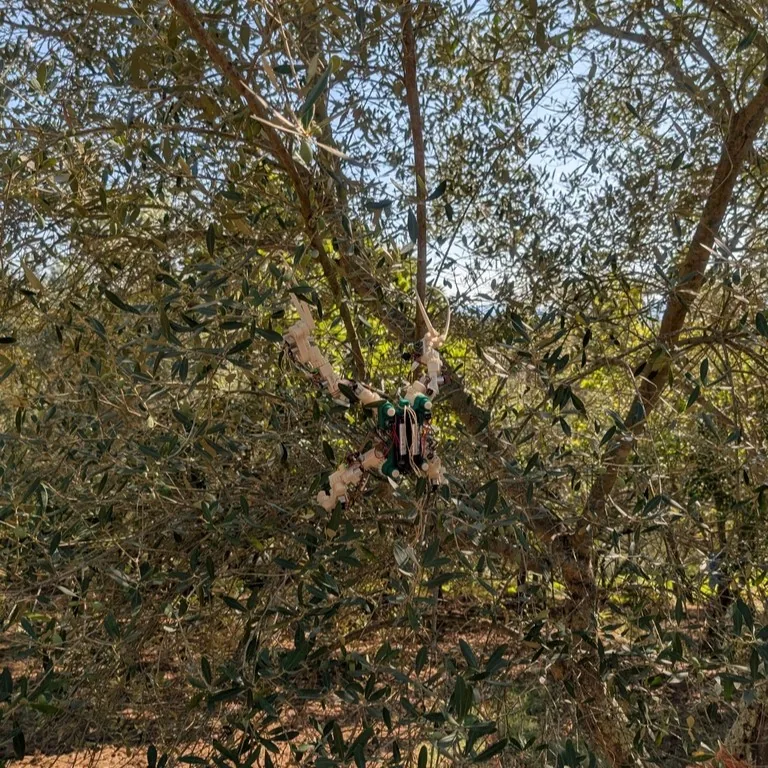
Gibbon Bot mk.1
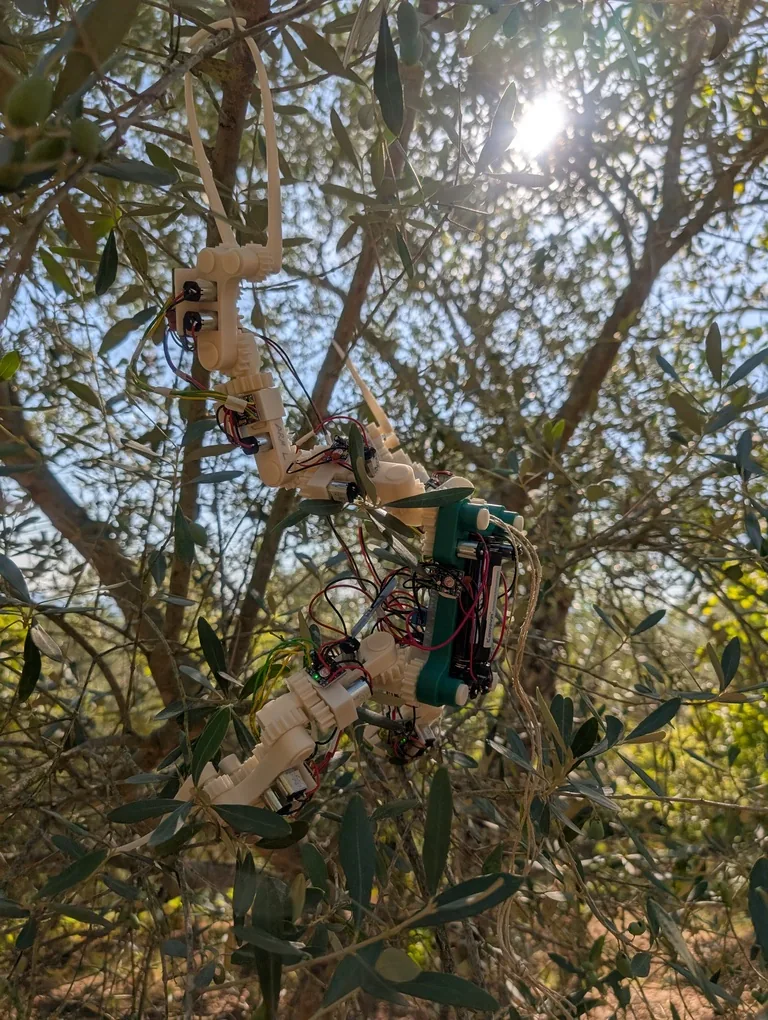
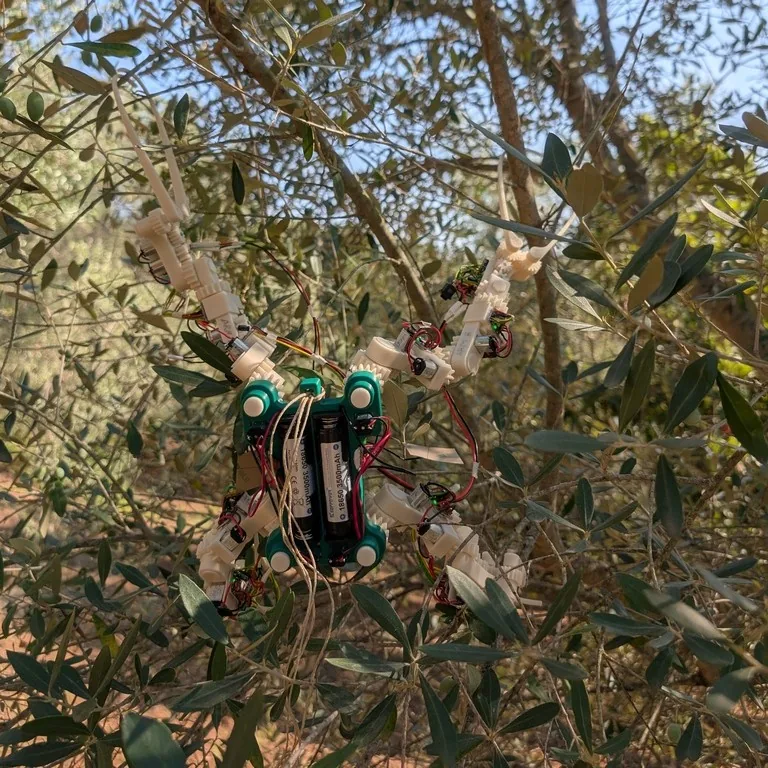
Designed and conceived in May 2025, prototyped and built in June to August 2025, taken into olive trees in August 2025. It did not become a working climber.
This structure has 4 robotic arms of 6–7 axis each, for enhanced mobility. It uses microcontrollers and decentralized reasoning for each arm (and leg) to move and reason independently, and a centralized unit to coordinate and control. Geared DC motors, lithium-ion batteries, ESP32 and nRF microcontrollers that communicate via Bluetooth Low Energy for secure and fast operations. 3D-printed parts in bioplastics and bioinspired fingers for passive gripping. This architecture in mind for efficient long battery operations.
It was long, precise manual work — many fingers stuck and pinched in between gears many times.
The main problem of Gibbon Bot mk.1 is that those motors cannot deliver enough torque for smooth movement on the tree. That is what mk.2 is for. Mk.2 is still in the lab.
Gibbon Bot mk.2
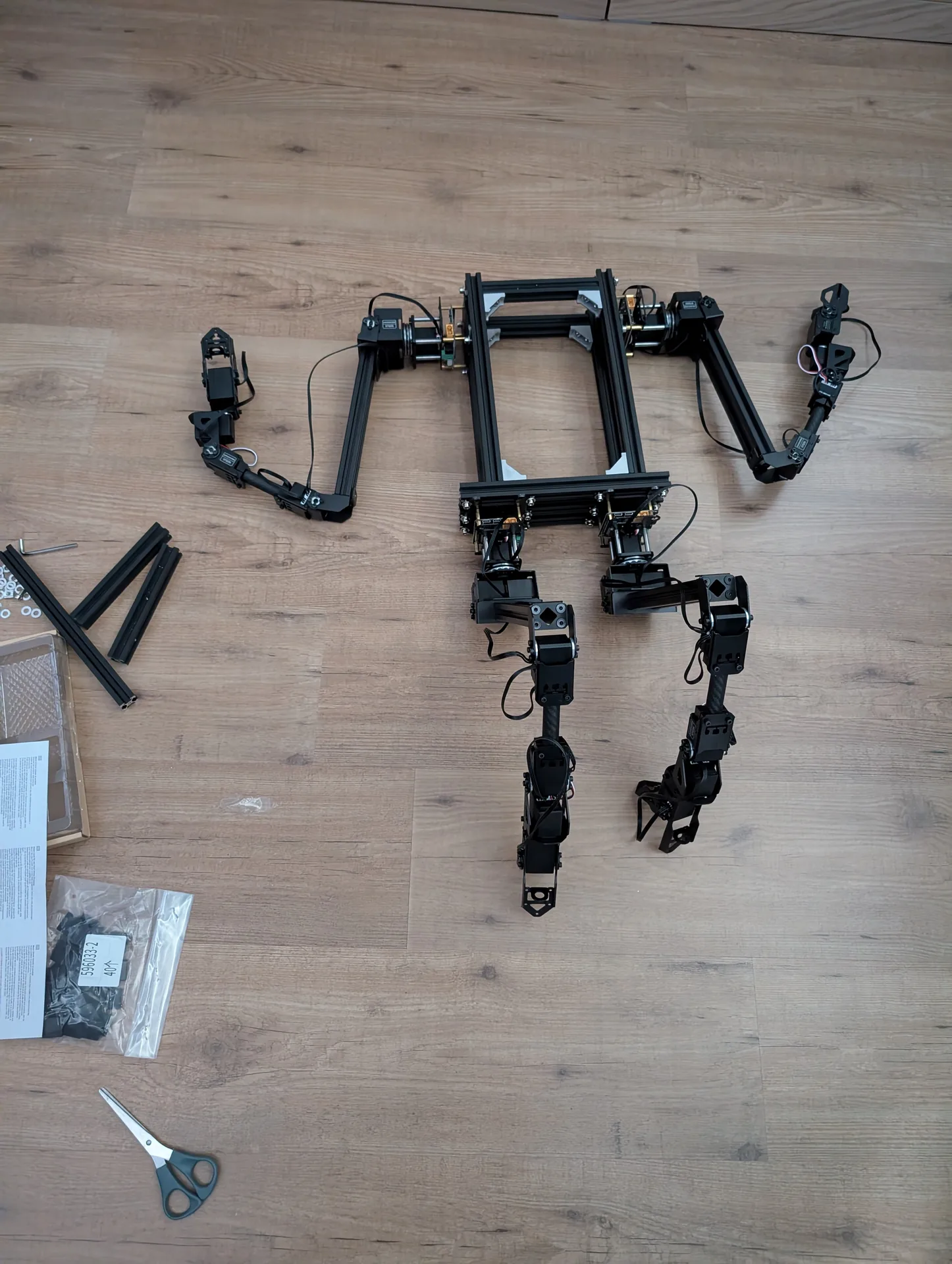
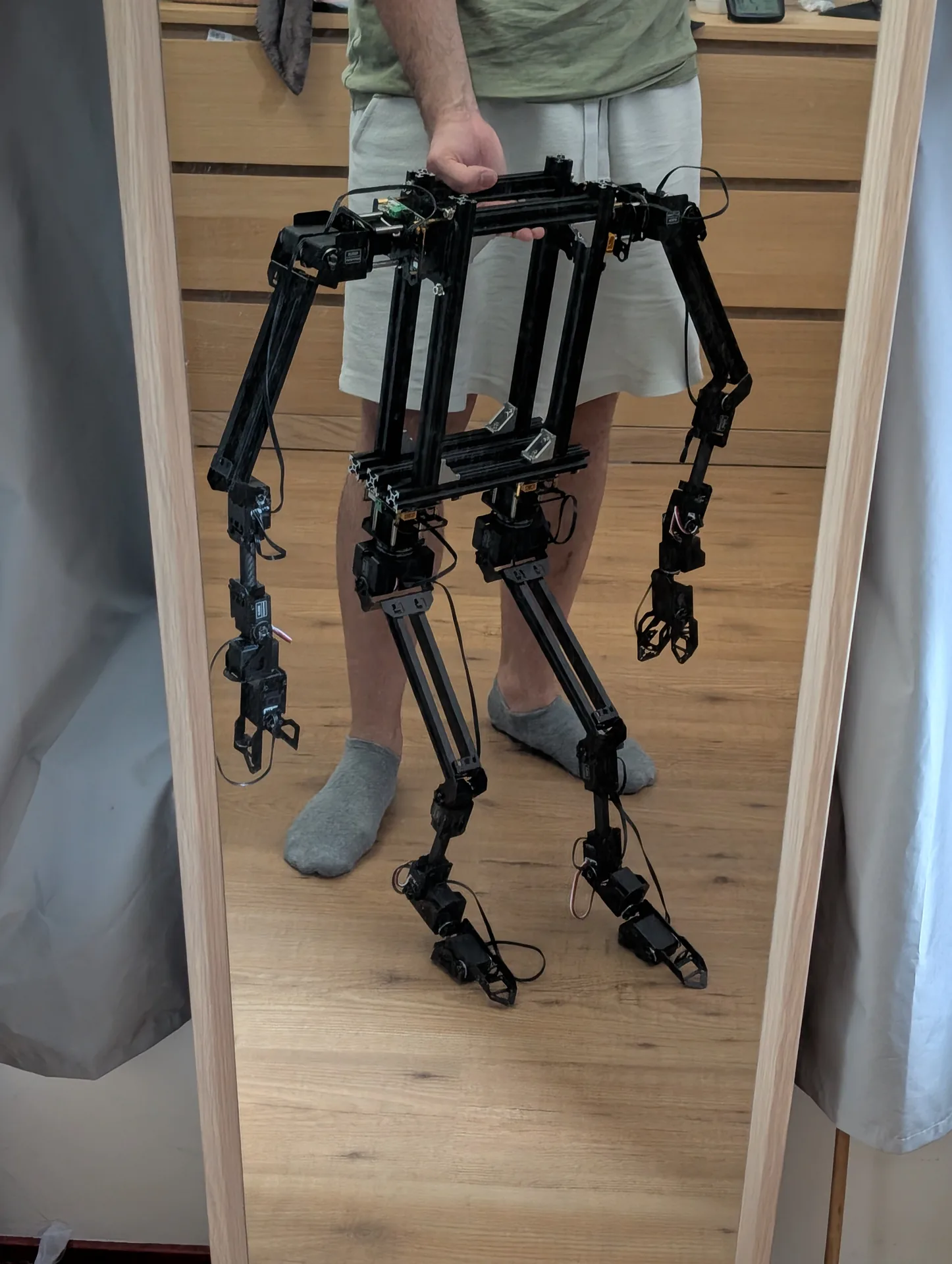
Mk.2 is four high-torque arms — two as arms, two as legs. Instead of geared DC motors (that can be easily powered from 3–6 volts) we used waterproof, powerful high-torque servo motors.
In a first prototype we tested the potential with off-the-shelf servo motors, powered in a not so safe manner via high-discharge Li-Po battery — the one you’d use for RC cars and planes. Given risks for electricity for humans, and having validated motor types and torque, after long research we found off-the-shelf robotic arms: Waveshare RoArm-M3 Pro. We modified them to be easily powered with 3S Li-Po batteries.
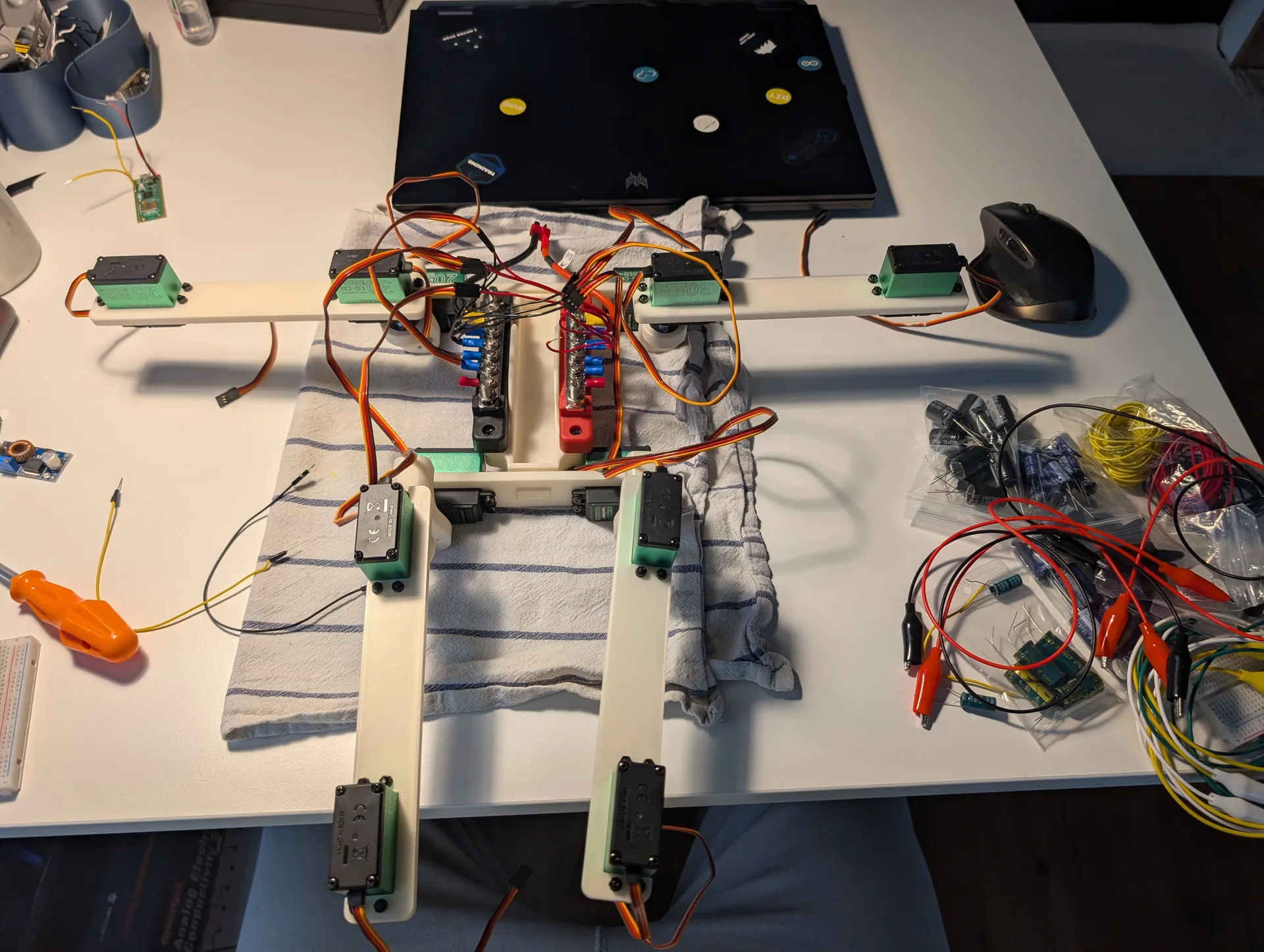
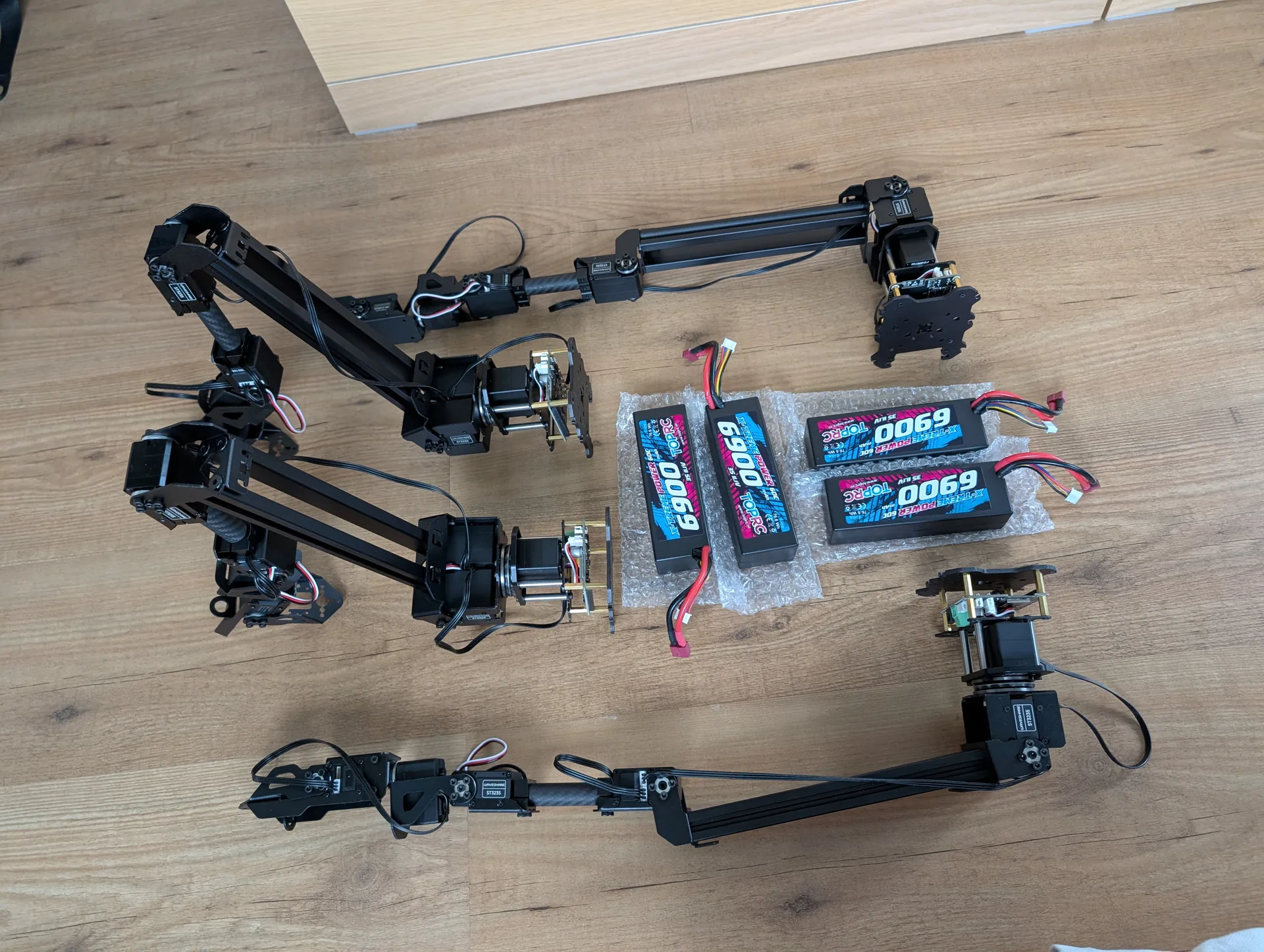
This structure is an assembly of 4 robotic arms — 2 used for gibbon arms and 2 for gibbon legs. Mk.2 is the architecture we are developing in the lab. It has not been proven in the field. We still think it is the right low-cost layout for arboreal locomotion. It does not work yet.
How it is funded
No private investor. We put our own time and personal money into it. Some of the work is helped by government subsidies and grants, including the Olivabot Vision feasibility study with the Province of Noord-Holland.
For April to December 2026 the project has a Dutch R&D tax credit (WBSO).
The firmware, vision, CAD, and control software are the same work we do for clients. Olivabot Vision is the study on giving this platform cameras and on-board AI, later, if the machine can move.
Gallery
Mk.1 in the grove, then mk.2 from first servo tests through assembly.
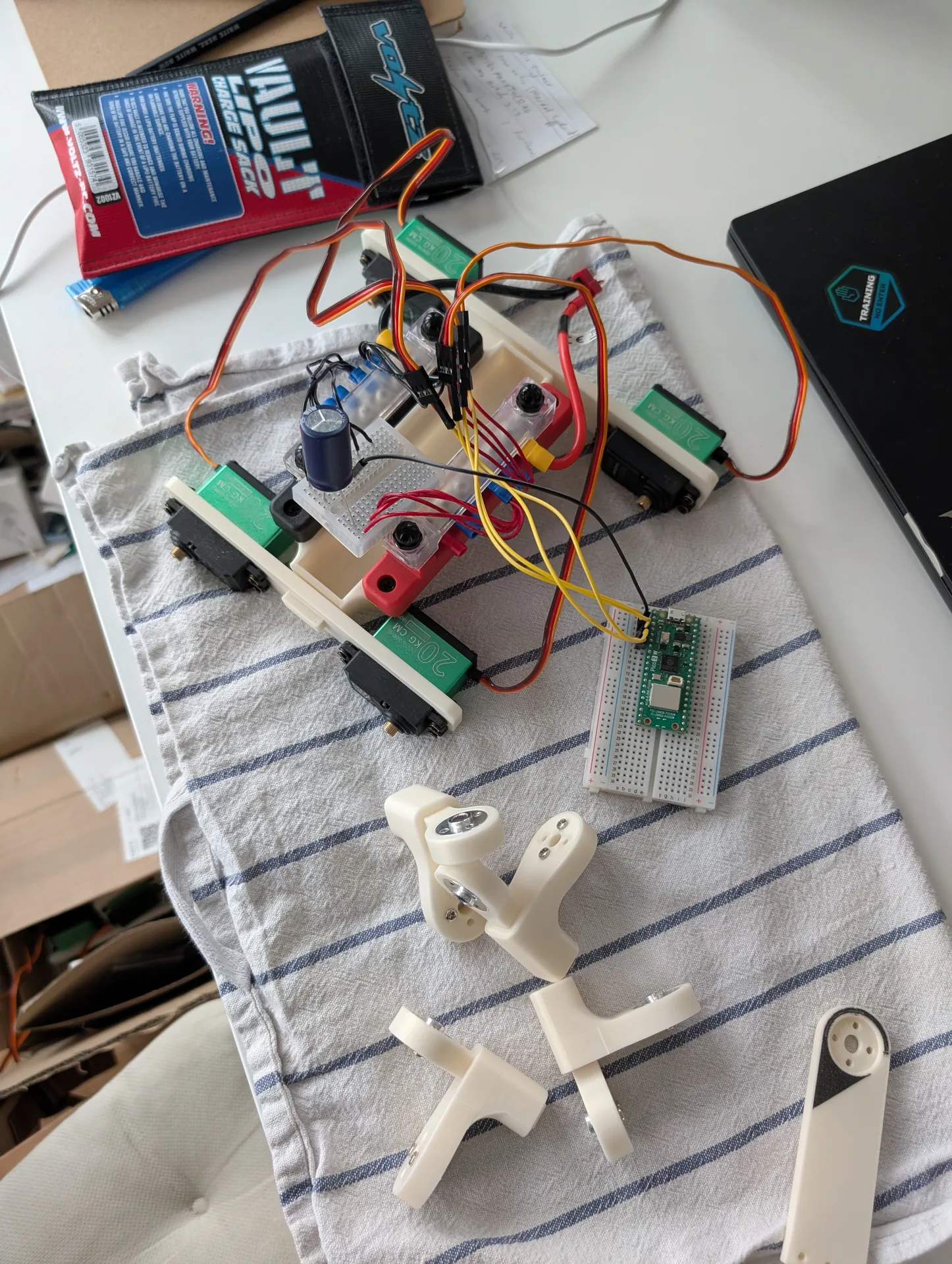
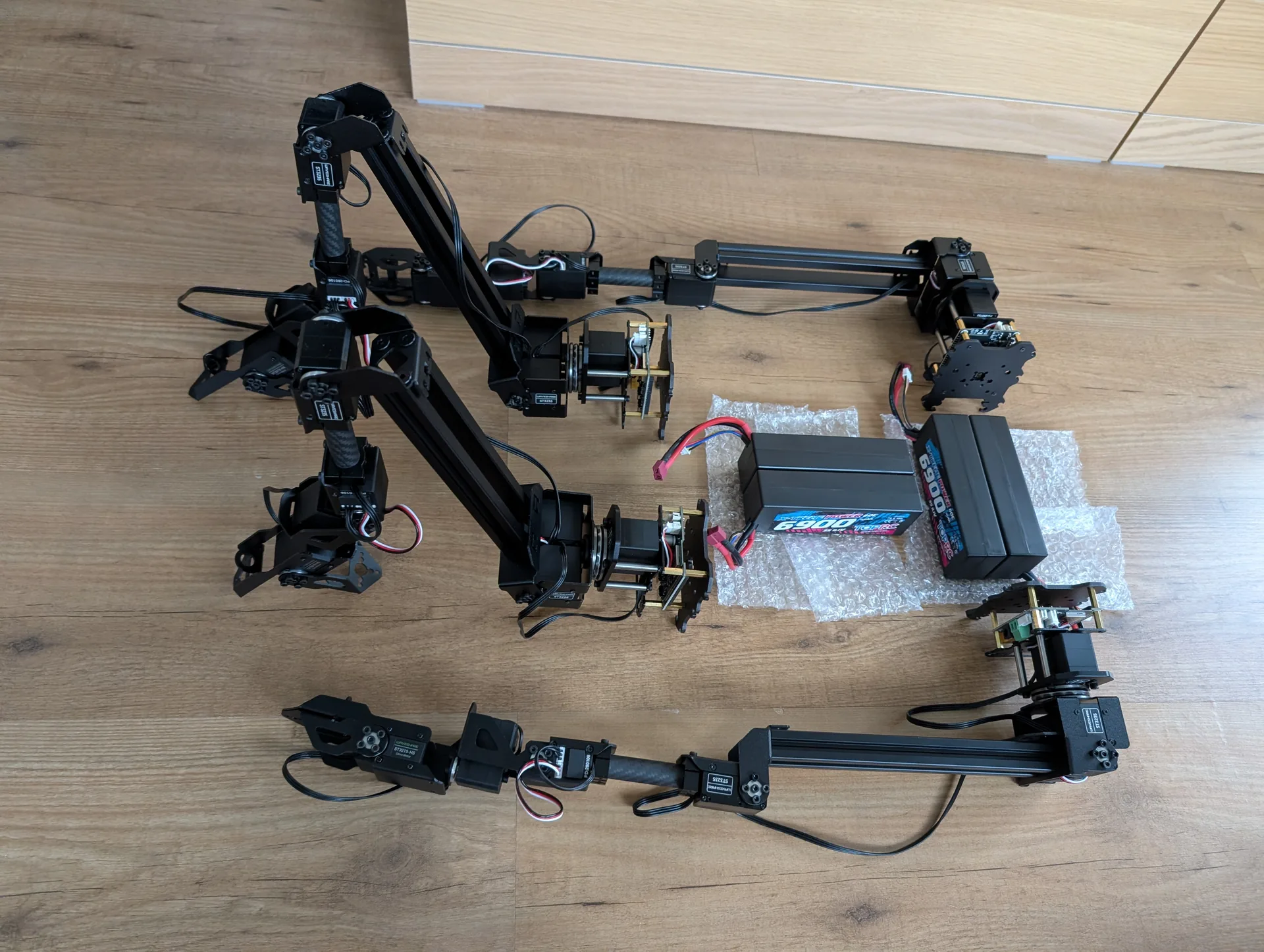
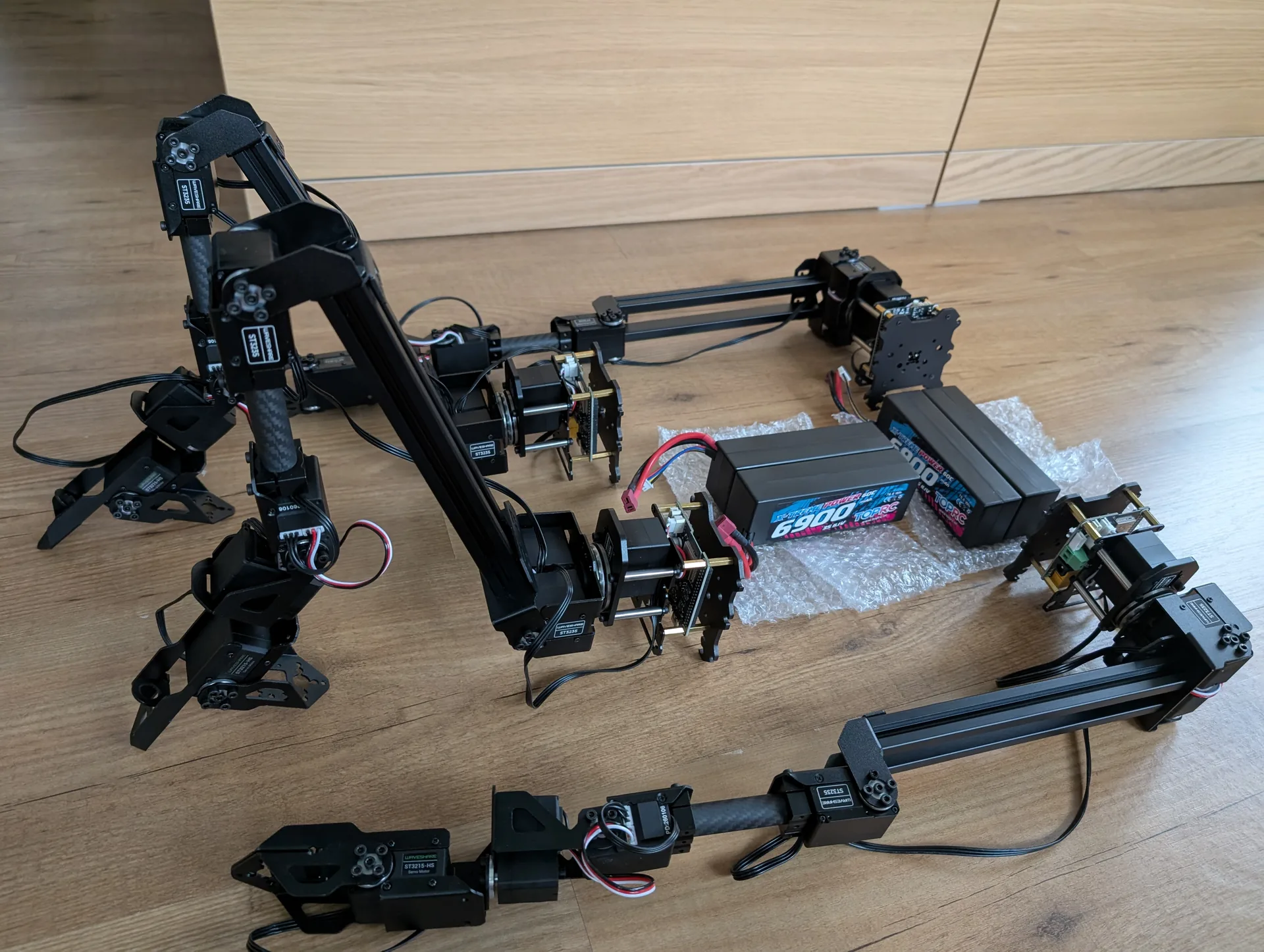
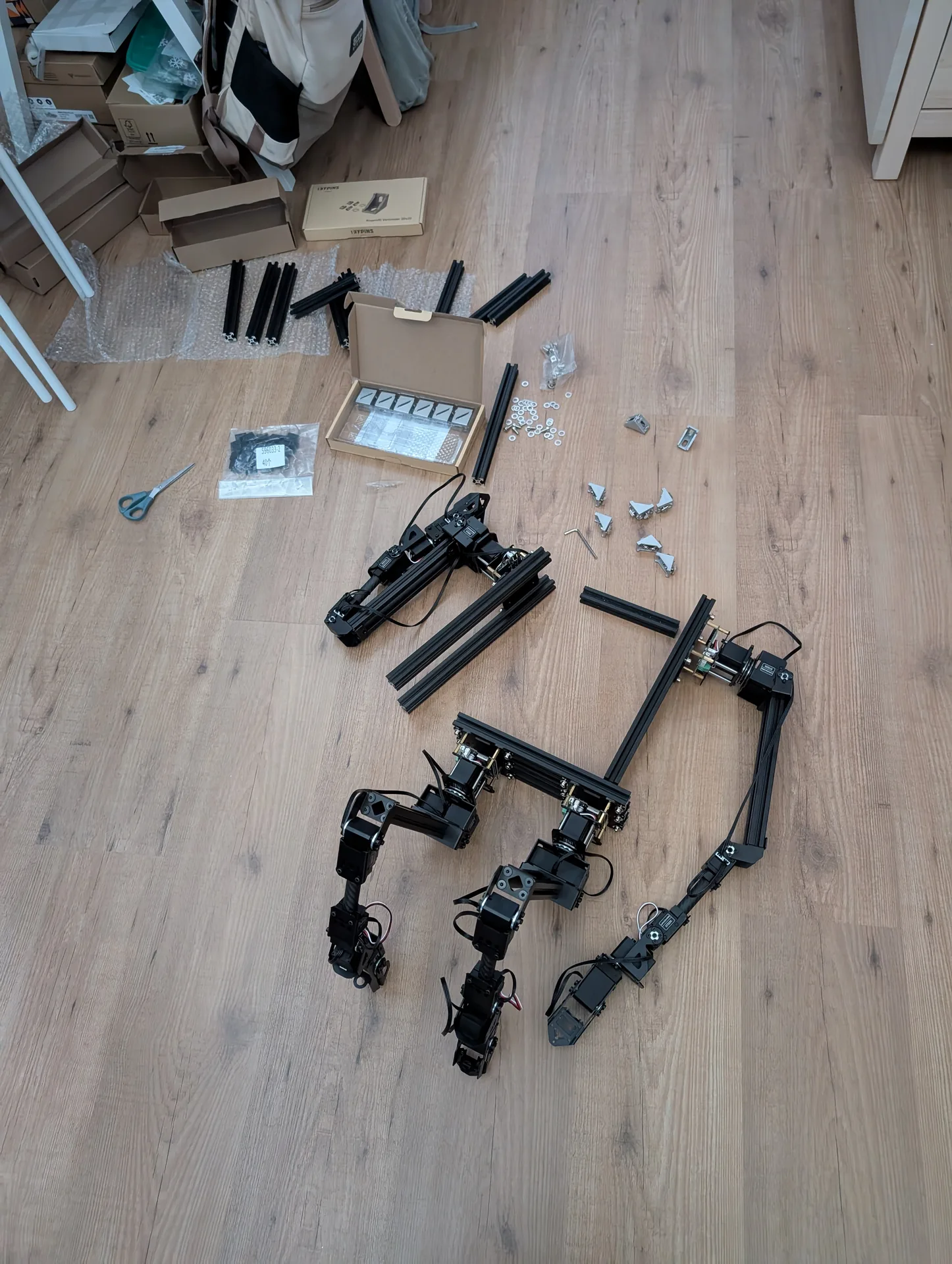
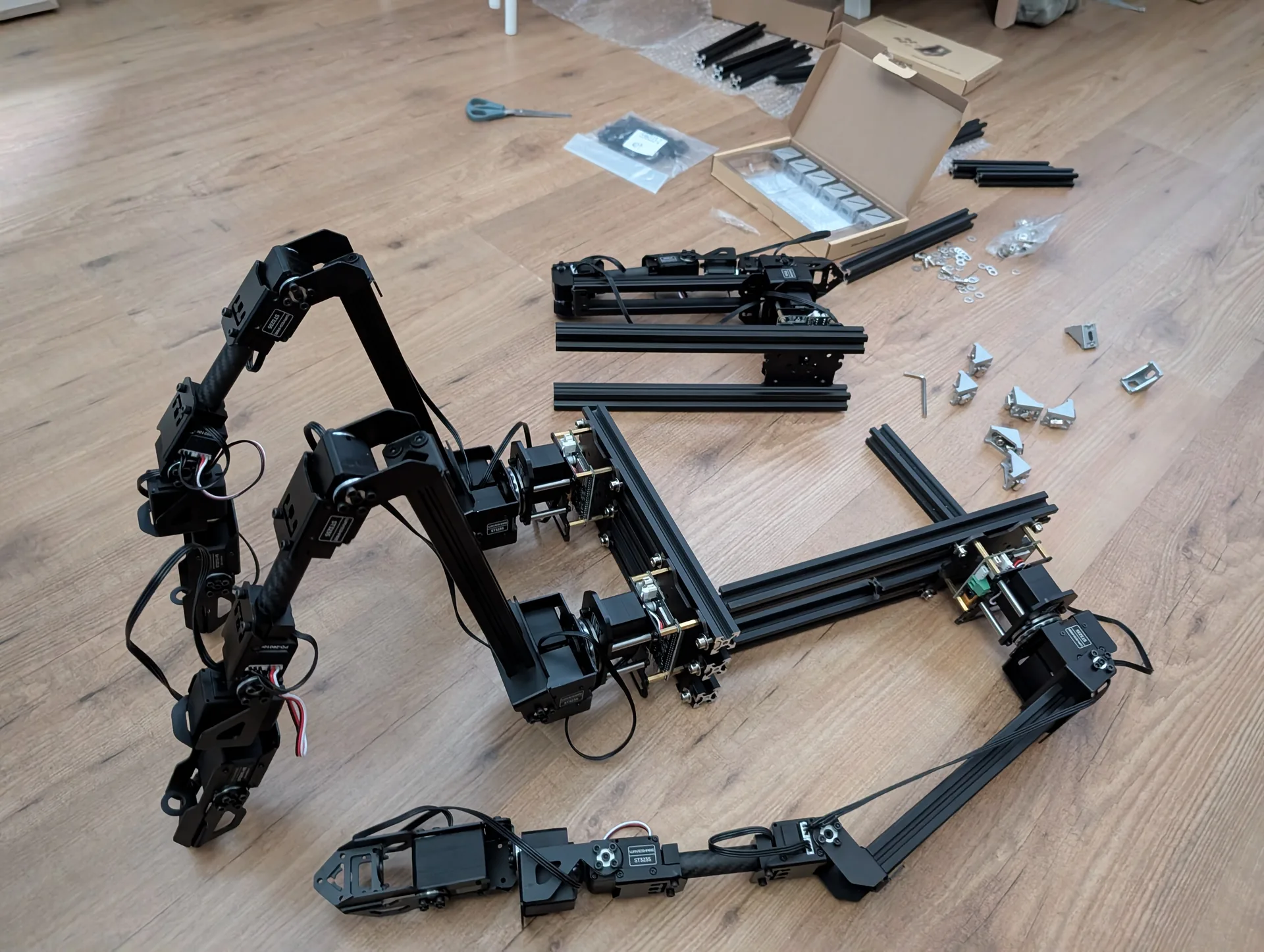
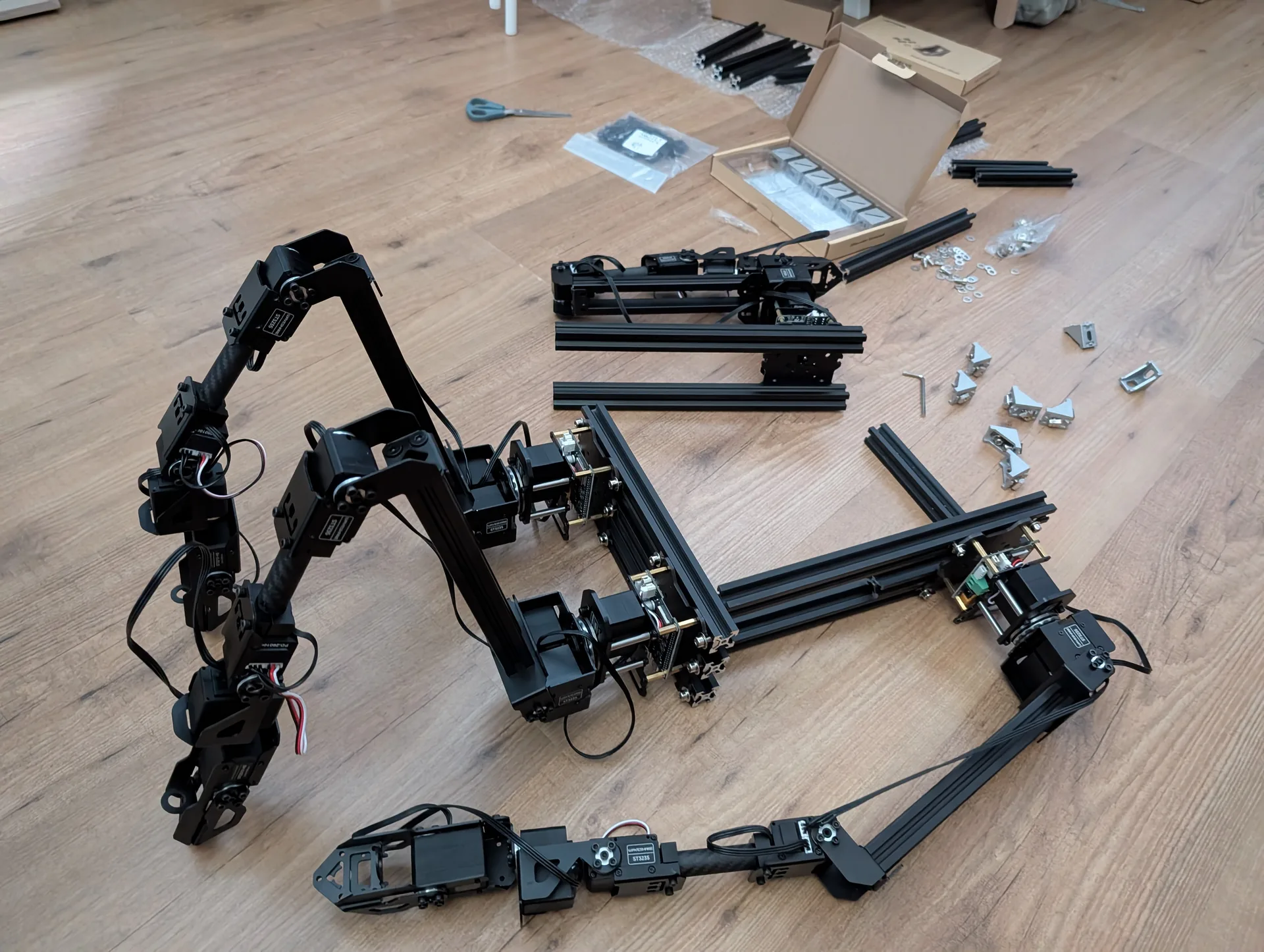
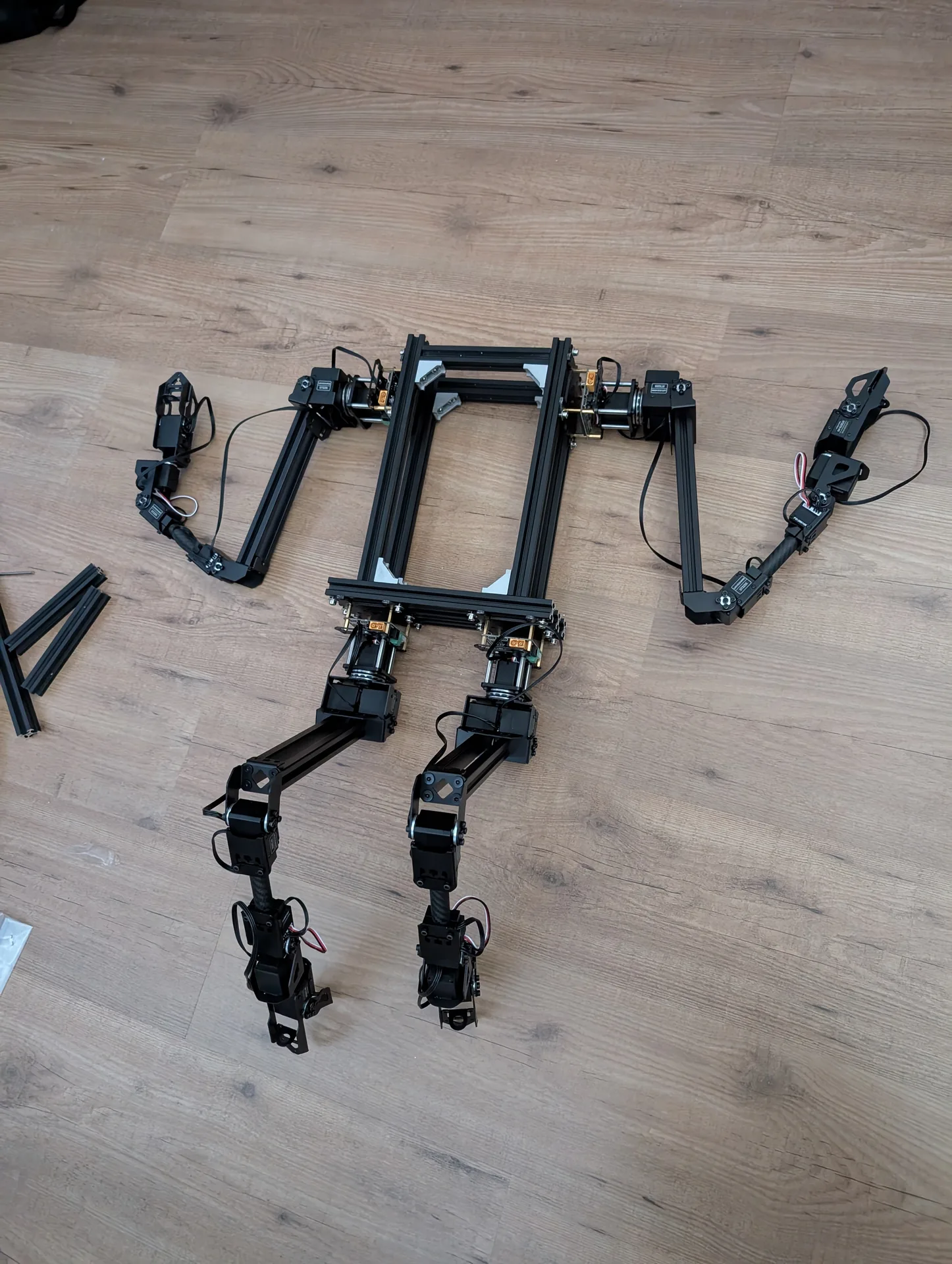
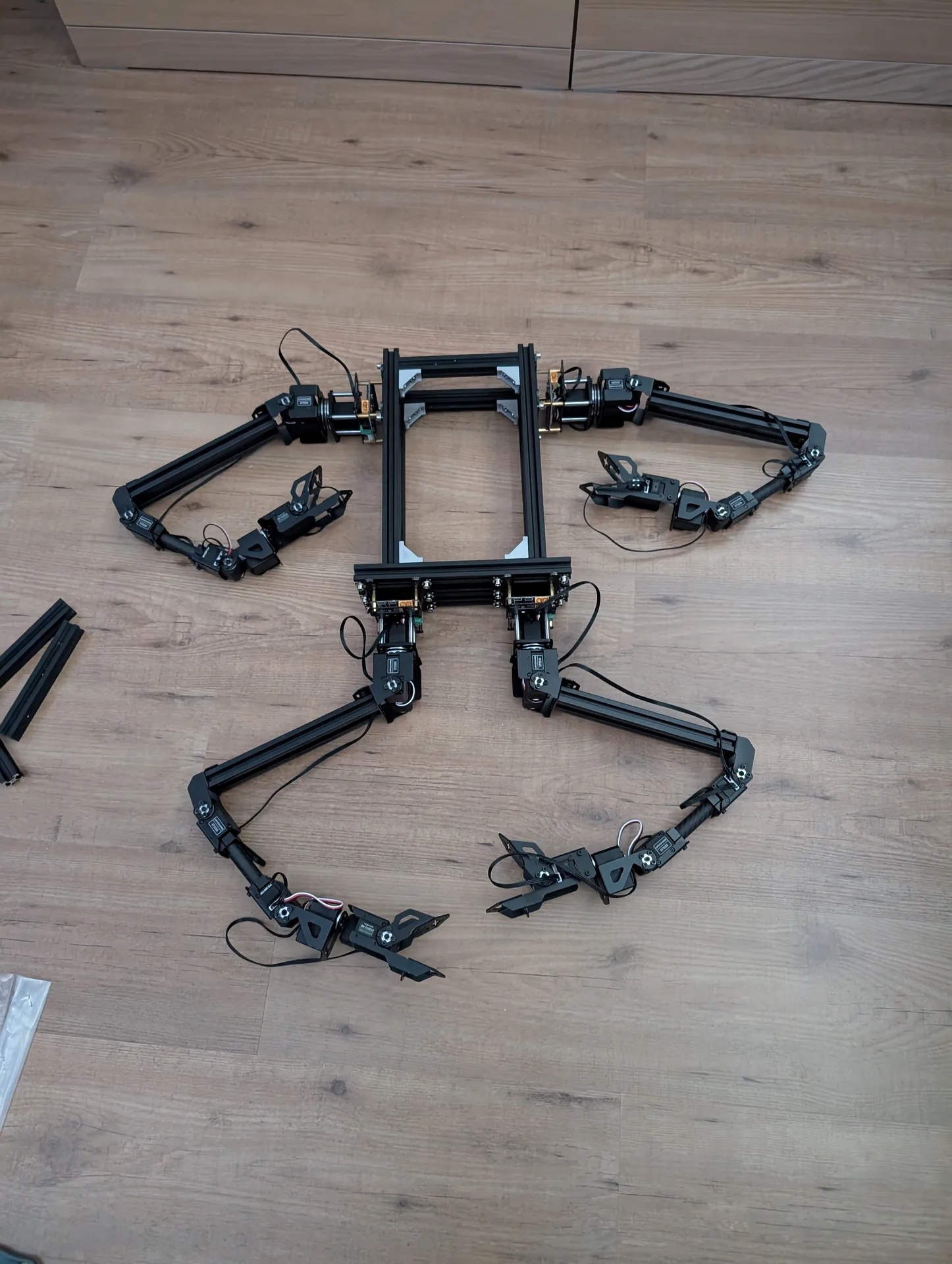
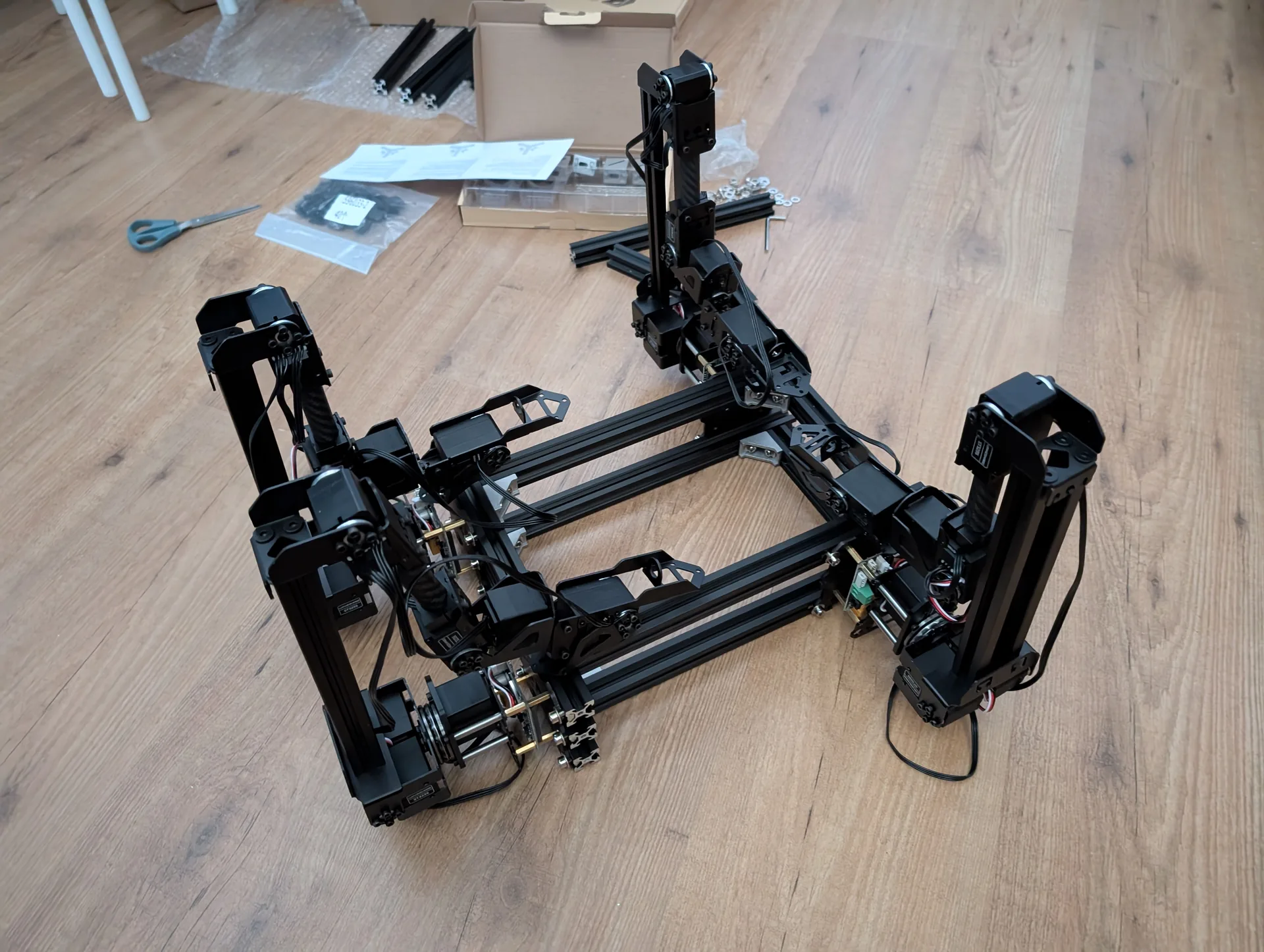
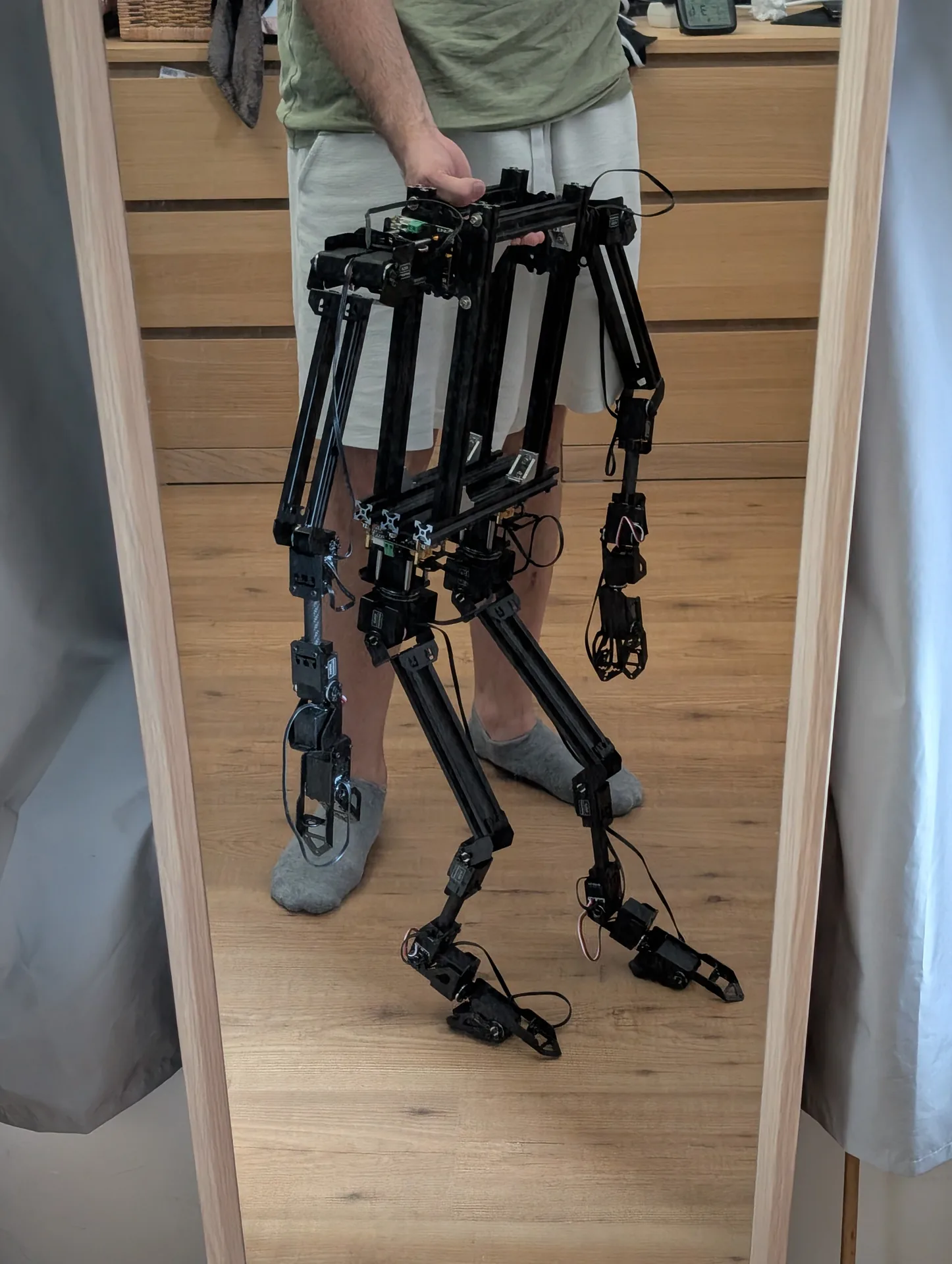
Gibbon Bot mk.1 (olive grove tests, August 2025) and Gibbon Bot mk.2 (lab assembly, 2026). Neither is a working farm robot.
Work with us
Related work: which farm robot can help, firmware, CAD. Email services@olivabot.com.